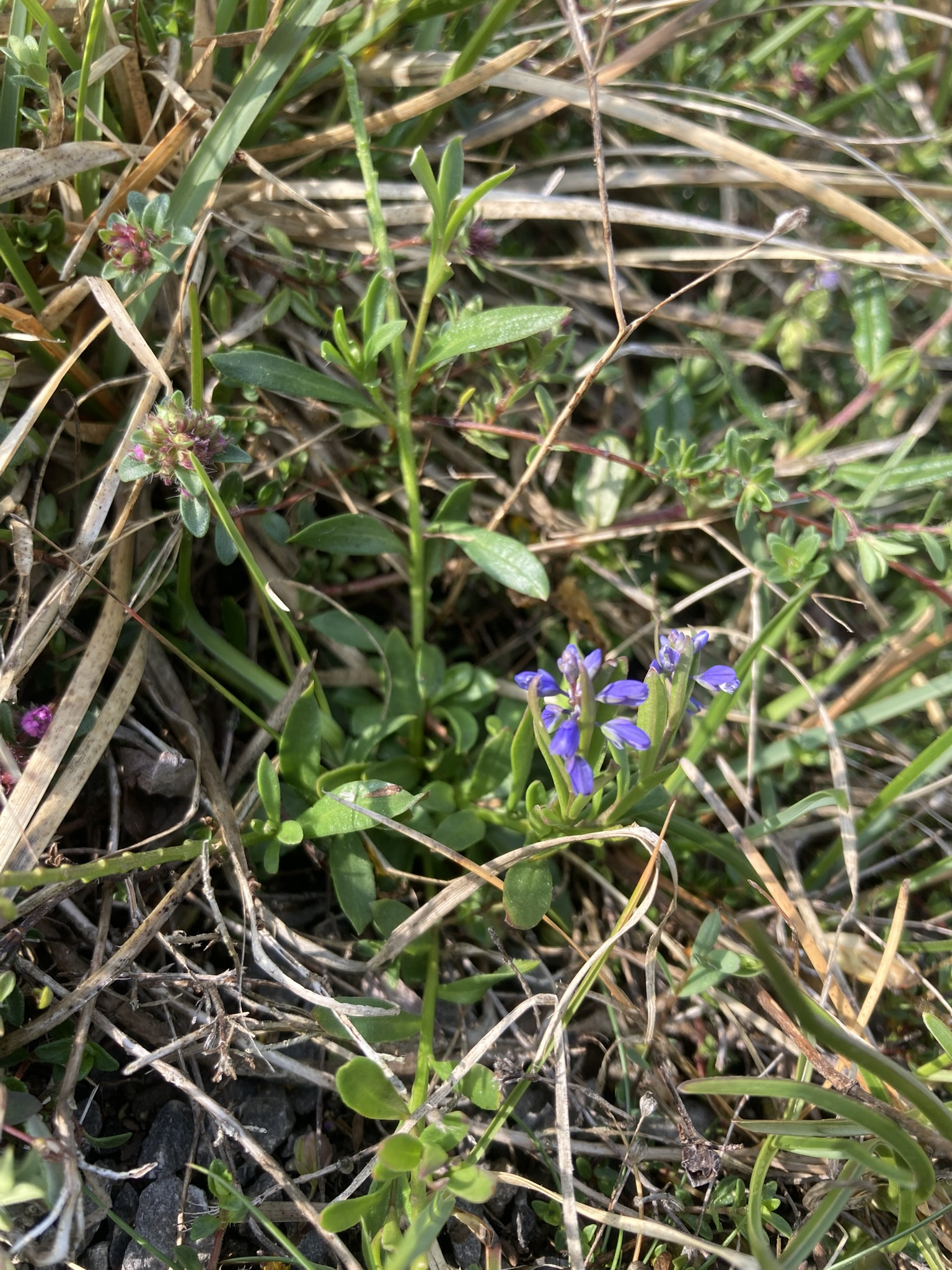
Latin name: Polygala amarella
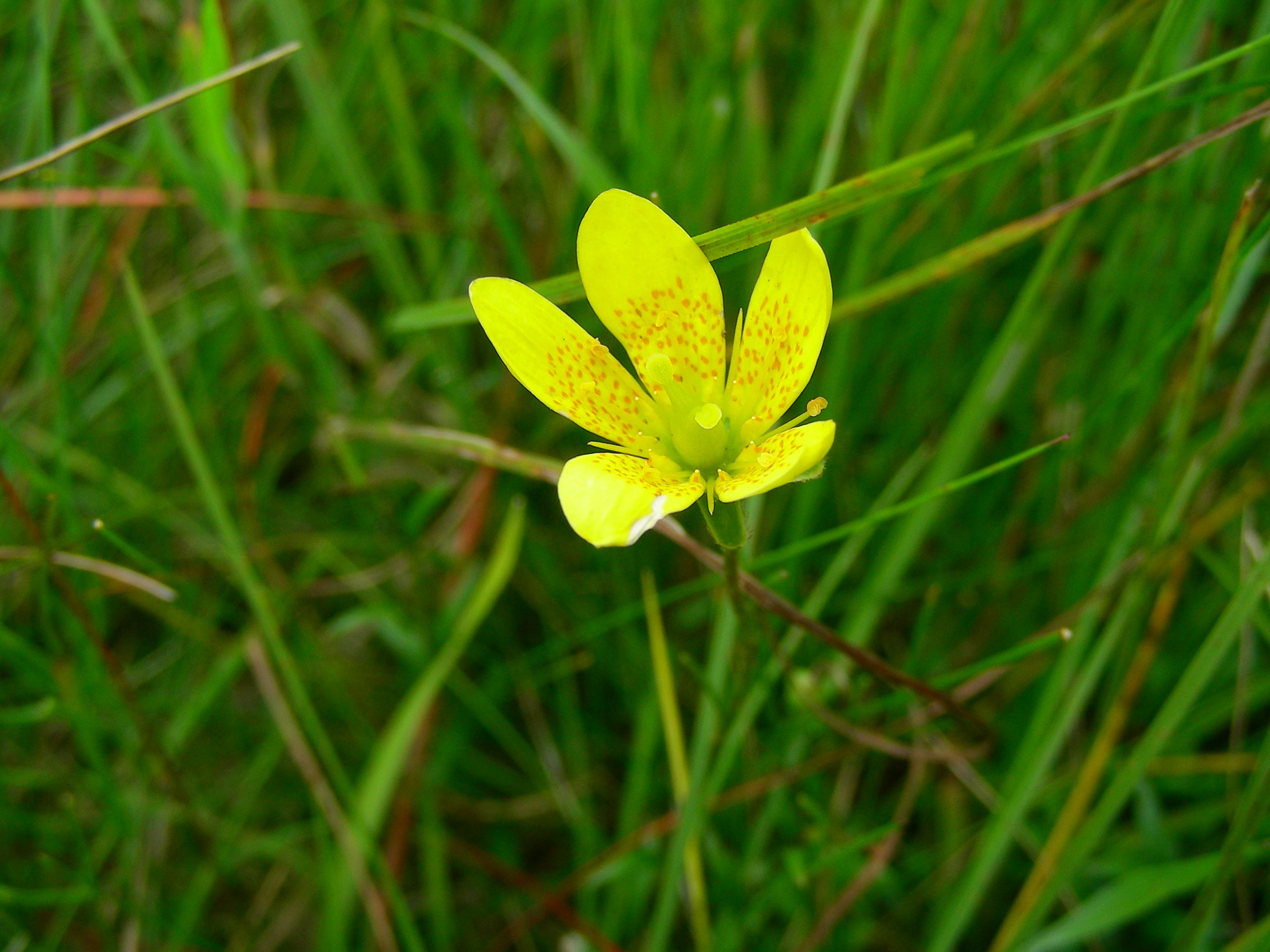
Dwarf milkwort (Polygala amarella) is a rare and highly localised plant in the Yorkshire Dales National Park, where it forms one of the species’ most important UK strongholds.
This small plant is restricted to a limited number of sites in England, particularly in Upper Teesdale, Orton and the Craven area of the Yorkshire Dales. The Craven populations are especially significant, representing the largest and most important populations in the UK.
Despite this, dwarf milkwort remains vulnerable due to its small population size, restricted distribution and limited ecological understanding.
Habitat in the Yorkshire Dales
Dwarf milkwort occurs in specialised habitats that are often limited in extent. In the Yorkshire Dales, it is found in two main habitat types:
- Calcareous mires, where plants grow on raised tussocks
- Dry limestone slopes and banks, typically within grassland dominated by blue moor-grass (Sesleria caerulea)
On limestone sites, plants are often associated with:
- Areas of open rock or thin soils
- Short vegetation where competition from taller plants is limited
These habitat requirements make the species sensitive to even small environmental changes.
Distribution and population pattern
Dwarf milkwort is a highly localised species, occurring in small, discrete patches.
- Populations tend to be fragmented and scattered
- Individual colonies are often small and isolated
- The species has a limited ability to spread naturally
Because of this, each population is important for the long-term survival of the species.
Grazing and habitat management
The condition of dwarf milkwort populations is closely linked to grazing management.
- The species is generally associated with low levels of grazing pressure
- Both overgrazing and undergrazing can pose risks
- Precise tolerance levels for grazing are not yet fully understood
Maintaining the right balance is critical to ensure:
- Open conditions are preserved
- Plants can flower and reproduce
Threats and conservation challenges
Dwarf milkwort faces a range of pressures linked to its specialised habitat and limited distribution. Key threats include:
- Changes in grazing regimes
- Scrub encroachment, which can shade out plants
- Alterations in hydrology, particularly in wetland habitats
- Small population size, making sites vulnerable to localised loss
These factors highlight the importance of site-specific management.
Conservation status
Dwarf milkwort has a high conservation priority in the UK:
- Listed as a Species of Principal Importance under Section 41 (S41) of the Natural Environment and Rural Communities (NERC) Act 2006
- Classified as Endangered on the Vascular Plant Red Data List for Great Britain (2025) due to ongoing decline
Within the Yorkshire Dales National Park, it is designated as a Category 1 Priority Species in the Yorkshire Dales Nature Recovery Plan.
This reflects its vulnerability and the need for targeted conservation action.
Monitoring and management
Work is underway with partners to safeguard dwarf milkwort populations in the Yorkshire Dales. This includes:
- Monitoring population extent and condition
- Assessing regeneration and habitat quality
- Guiding grazing management and habitat protection
- Identifying opportunities for long-term conservation and restoration
These programmes provide essential evidence to support effective management.
Why dwarf milkwort matters
Dwarf milkwort is an important indicator of specialist limestone and wetland habitats in the Yorkshire Dales. Its presence reflects:
- High-quality calcareous grassland and mire habitats
- Carefully balanced grazing regimes
- The National Park’s role as a refuge for rare and specialised species
Protecting dwarf milkwort contributes to wider nature recovery efforts across the Yorkshire Dales National Park.
Nature Recovery Plan
Find out how partners are working together to create a richer, more connected landscape for nature and wildlife.
Read more about Nature Recovery Plan