Latin name: Dryas octopetala
Mountain avens (Dryas octopetala) is one of the most distinctive and special plants of the Yorkshire Dales National Park.
This low-growing species forms spreading mats across open limestone and is a survivor from colder periods after the last Ice Age. Today, it remains an important part of the Dales’ upland limestone landscapes.
Identifying mountain avens
Mountain avens is relatively easy to recognise once seen.
Key features include:
- Large white flowers, usually with eight petals (sometimes more)
- A bright yellow centre
- Glossy dark green leaves on top, with white, woolly undersides
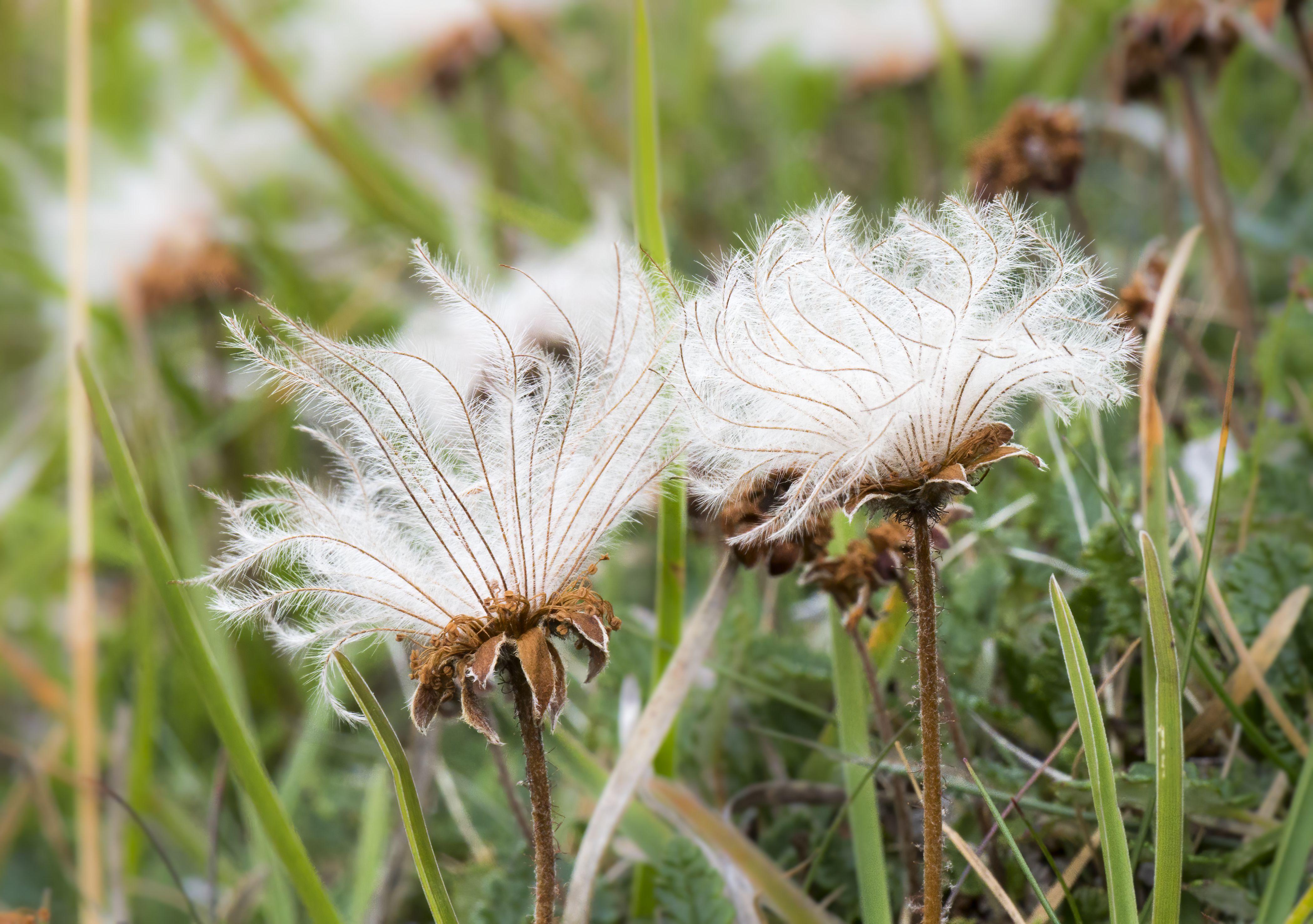
- Distinctive feathery seed heads in summer
These characteristics make it one of the most recognisable wildflowers of limestone habitats in the Yorkshire Dales.
Habitat in the Yorkshire Dales
Mountain avens is closely associated with open limestone environments. In the Yorkshire Dales National Park, it is found in:
- Limestone grassland, often with short vegetation
- Rock ledges and broken ground
- Limestone pavement and areas with thin, well-drained soils
- Sites where taller plants cannot easily dominate
It often grows alongside species such as blue moor-grass, indicating high-quality limestone habitat.
Where to find mountain avens
The Yorkshire Dales is one of the most important areas in England for mountain avens. Key populations occur in:
- Wharfedale, where thousands of small patches grow across limestone valleys
- Nearby areas such as Upper Teesdale (Cronkley Fell), which support nationally important populations
These locations represent some of the largest remaining populations in England.
Life cycle and ecology
Mountain avens is a long-lived species, with individual plants capable of surviving for hundreds of years.
- It spreads slowly over time by forming expanding mats
- New plants rarely establish from seed
- Flowers appear from late spring into early summer
- Flowers provide nectar for insects, especially flies
Because regeneration is limited, existing patches are particularly important.
Threats and conservation challenges
Mountain avens populations are vulnerable due to their small, localised distribution.
Key threats include:
- Overgrazing, which can prevent flowering and seed production
- Undergrazing, allowing taller vegetation to outcompete plants
- Physical disturbance, including rock falls in exposed habitats
- Loss of the open limestone conditions the species requires
Balancing grazing levels is critical to maintaining suitable habitat.
Conservation status
Despite its rarity in some areas, mountain avens is currently classified as Least Concern on the Vascular Plant Red Data List for Great Britain (2025). Within the Yorkshire Dales National Park, it is designated as a Category 1 Priority Species in the Yorkshire Dales Nature Recovery Plan.
This reflects its local importance and the need for targeted conservation management.
Monitoring and management
Work is underway to support mountain avens populations in the Yorkshire Dales:
- Monitoring population size, health and regeneration
- Assessing habitat condition
- Managing grazing levels
- Protecting key limestone habitats
This work helps guide future conservation and ensures long-term survival of the species.
Why mountain avens matters
Mountain avens is an important indicator of high-quality limestone habitat in the Yorkshire Dales.
Its presence reflects:
- Healthy limestone grassland ecosystems
- Open, well-managed upland landscapes
- The Dales’ role as a refuge for Ice Age relict species
Protecting mountain avens helps maintain the unique natural heritage of the Yorkshire Dales National Park.
Nature Recovery Plan
Find out how partners are working together to create a richer, more connected landscape for nature and wildlife.
Read more about Nature Recovery Plan