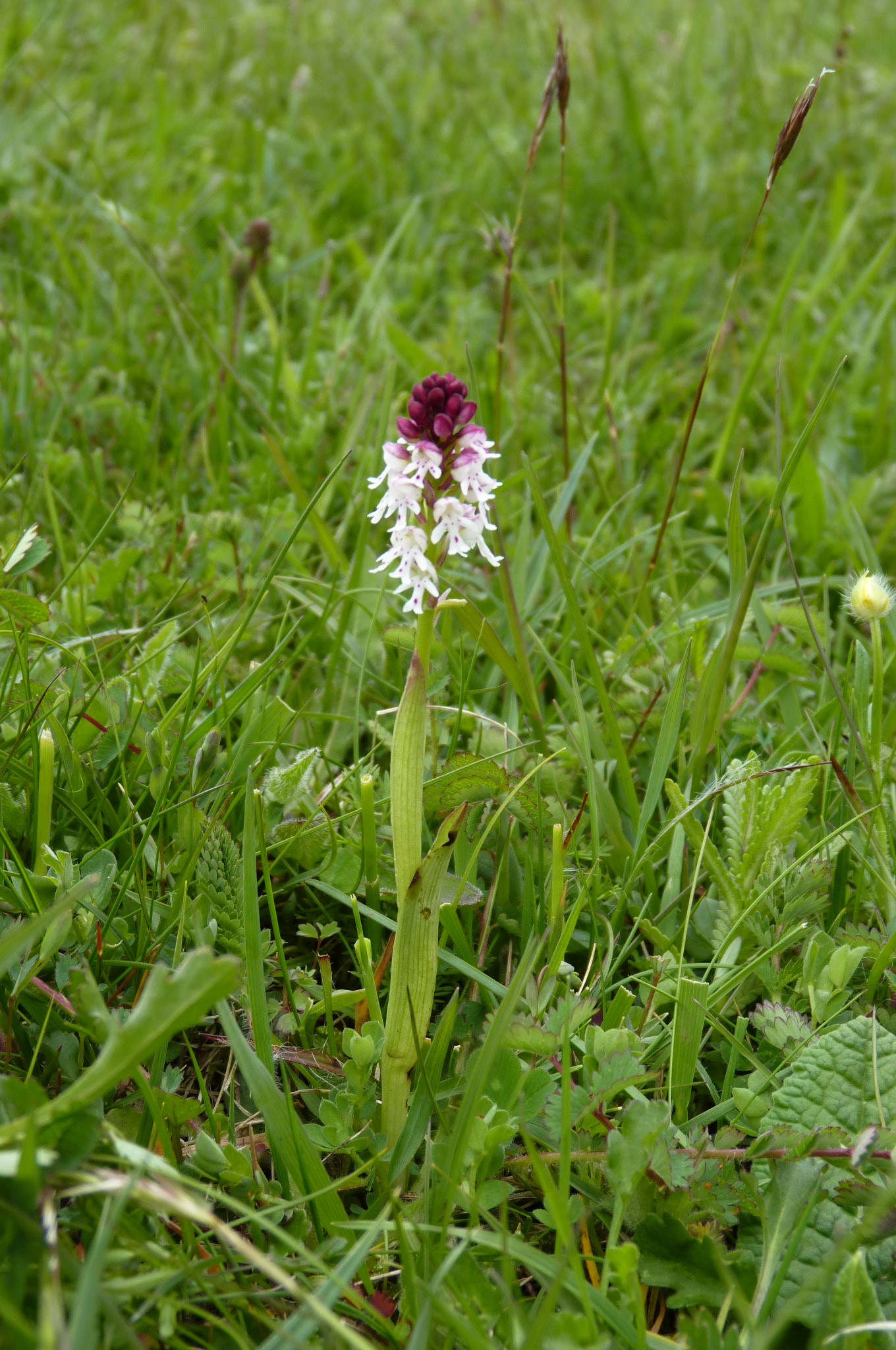
Latin name: Neotinea ustulata
The burnt orchid is one of the rarest and most distinctive wildflowers in the Yorkshire Dales National Park. Recognisable by its unique flower spike and sweet honey scent, this orchid blooms in late May and early June.
Although once widespread in parts of England, the burnt orchid has undergone significant declines and is now considered endangered, making it a key Priority Species within the National Park’s conservation work.
Identifying the burnt orchid
The burnt orchid is named for the unusual appearance of its flower spike:
- The upper, unopened buds are dark purple, giving a “burnt” appearance
- The lower flowers are white or pale pink with raised purple spots
- Flowers are lightly honey-scented and attract insects such as flies, beetles and possibly butterflies
This striking contrast makes it one of the most recognisable orchids in the Yorkshire Dales.
Life cycle and reproduction
Like many orchids, the burnt orchid has a highly specialised life cycle:
- Each plant can produce thousands of tiny seeds (up to around 4,000 per seed capsule)
- Seeds are dispersed by wind over long distances, sometimes hundreds of kilometres
- Successful germination depends on a relationship with specific soil fungi, which provide essential nutrients
This reliance on fungi makes the species particularly sensitive to changes in habitat conditions.
Habitat in the Yorkshire Dales
The burnt orchid is most commonly found in warm, dry, species-rich grassland, especially:
- Chalk and limestone grassland
- South-facing slopes
- Areas that are tightly grazed, helping maintain short vegetation
In the Yorkshire Dales National Park, the species is very rare, with records from Coverdale, Wensleydale and Swaledale. These populations are often associated with hay meadows with calcareous (lime-rich) influence.
Associated wildflowers
Burnt orchid typically occurs in rich wildflower communities, alongside species such as:
- Kidney vetch
- Black knapweed
- Pignut
- Gentians
- Horseshoe vetch
- Common bird’s-foot trefoil
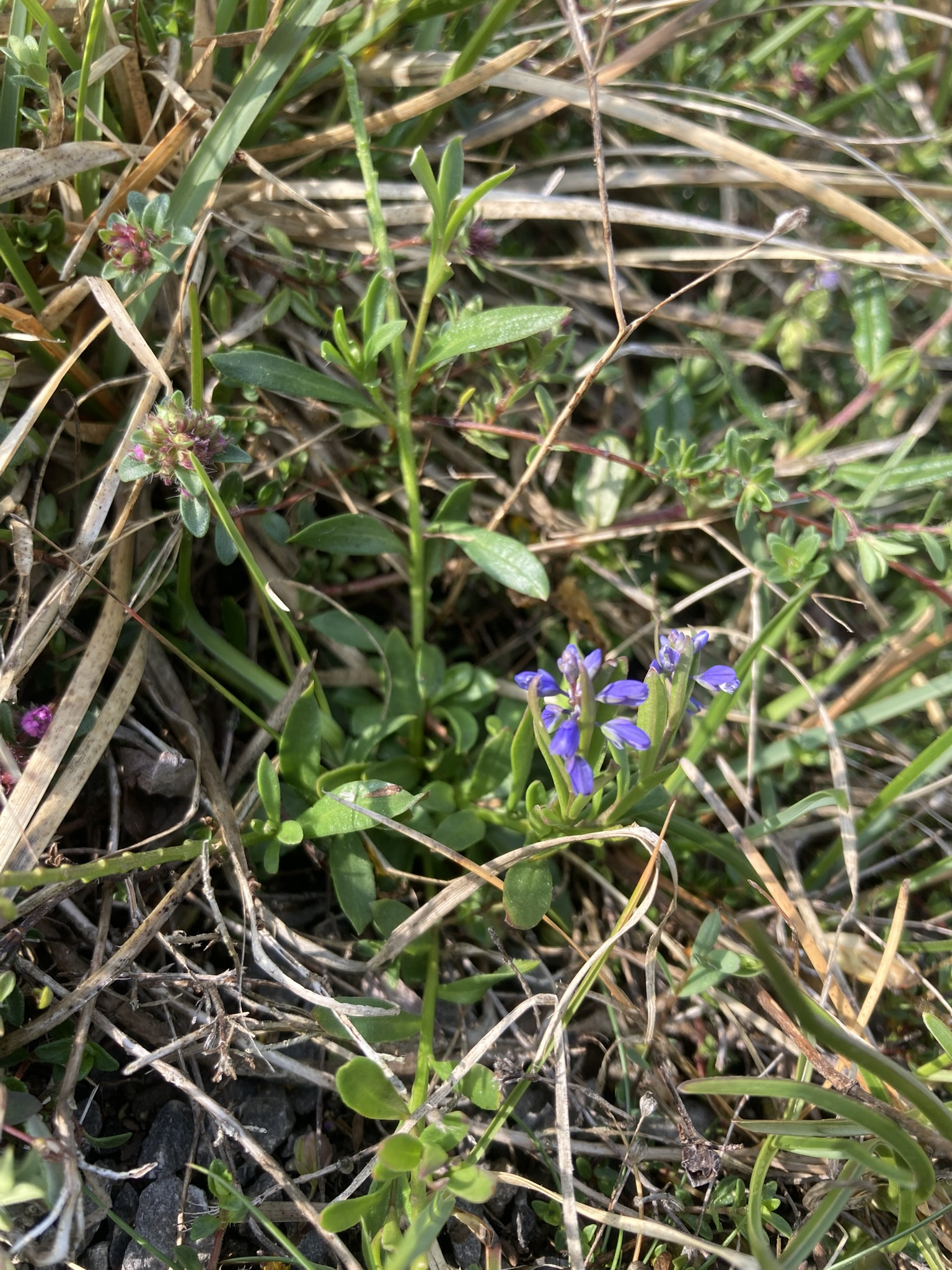
- Milkworts
- Cowslip
- Yellow-rattle
- Great burnet
It is also often found growing near other orchid species, including:
- Common spotted-orchid
- Fragrant orchid
- Early-purple orchid
- Lesser butterfly-orchid
These plant communities indicate high-quality, species-rich grassland habitats.
Distribution in the UK
In the UK, the main strongholds for burnt orchid are in Wiltshire, Hampshire, Berkshire, East Sussex, East Kent and North Yorkshire. Despite this, populations are generally fragmented and declining, and the species is rare across its range.
Decline and conservation status
The burnt orchid has experienced one of the most severe declines of any wild orchid in Britain over the past 50 years.
Key causes include:
- Changes in agricultural practices, particularly intensification
- Ploughing of grassland
- Loss of grazing, leading to taller vegetation
- Habitat destruction from development and quarrying
As a result, it is listed as Endangered on both the Vascular Plant Red Data List for Great Britain (2005) and Vascular Plant Red List for England (2014).
It is a Priority Species under Section 41 of the Natural Environment and Rural Communities (NERC) Act 2006
It is designated as a Category 1 Priority Species in the Yorkshire Dales Nature Recovery Plan.
This means it requires targeted conservation action to ensure its survival in the National Park.
Why the burnt orchid matters
The burnt orchid is an important indicator of high-quality limestone grassland and hay meadow habitats.
Its presence reflects:
- Well-managed grazing regimes
- Species-rich plant communities
- Healthy soil ecosystems, including fungal networks
Protecting this species helps conserve the wider biodiversity of the Yorkshire Dales National Park’s special qualities.
Nature Recovery Plan
Find out how partners are working together to create a richer, more connected landscape for nature and wildlife.
Read more about Nature Recovery Plan