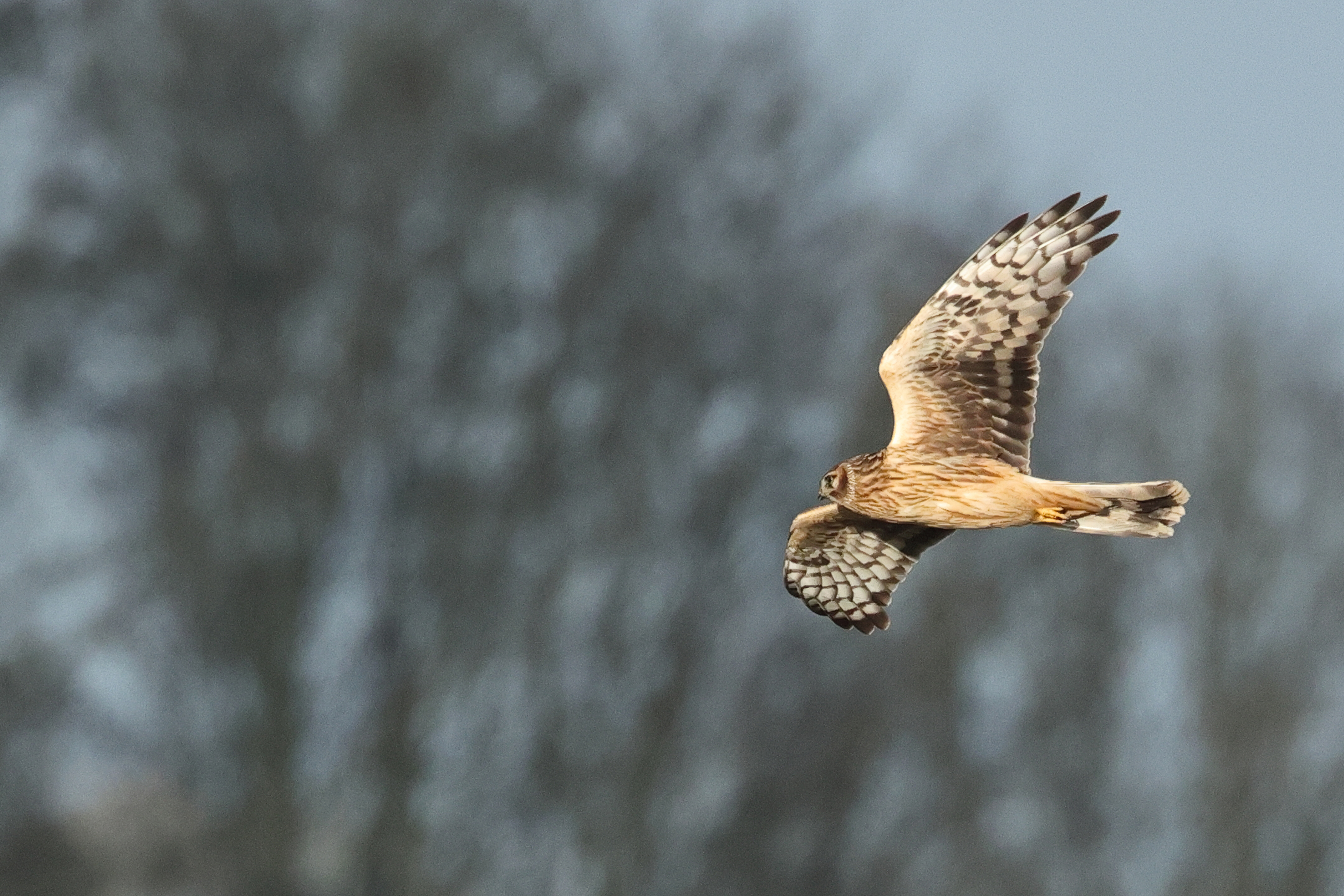
The upland landscapes of the Yorkshire Dales National Park provide important habitat for a range of birds of prey (raptors). Some species are thriving, with buzzards now widespread across the National Park - a stark contrast to the 1980s and 1990s when they were largely confined to western areas.
Kestrels are also commonly seen, although numbers vary from year to year as they depend on fluctuating vole populations.
Heather moorland is particularly important for breeding species such as merlin, where long vegetation provides nesting cover alongside healthy populations of prey species like meadow pipit.
However, some birds of prey remain restricted in distribution and are identified as Priority Species, requiring targeted conservation action.
Red Kite
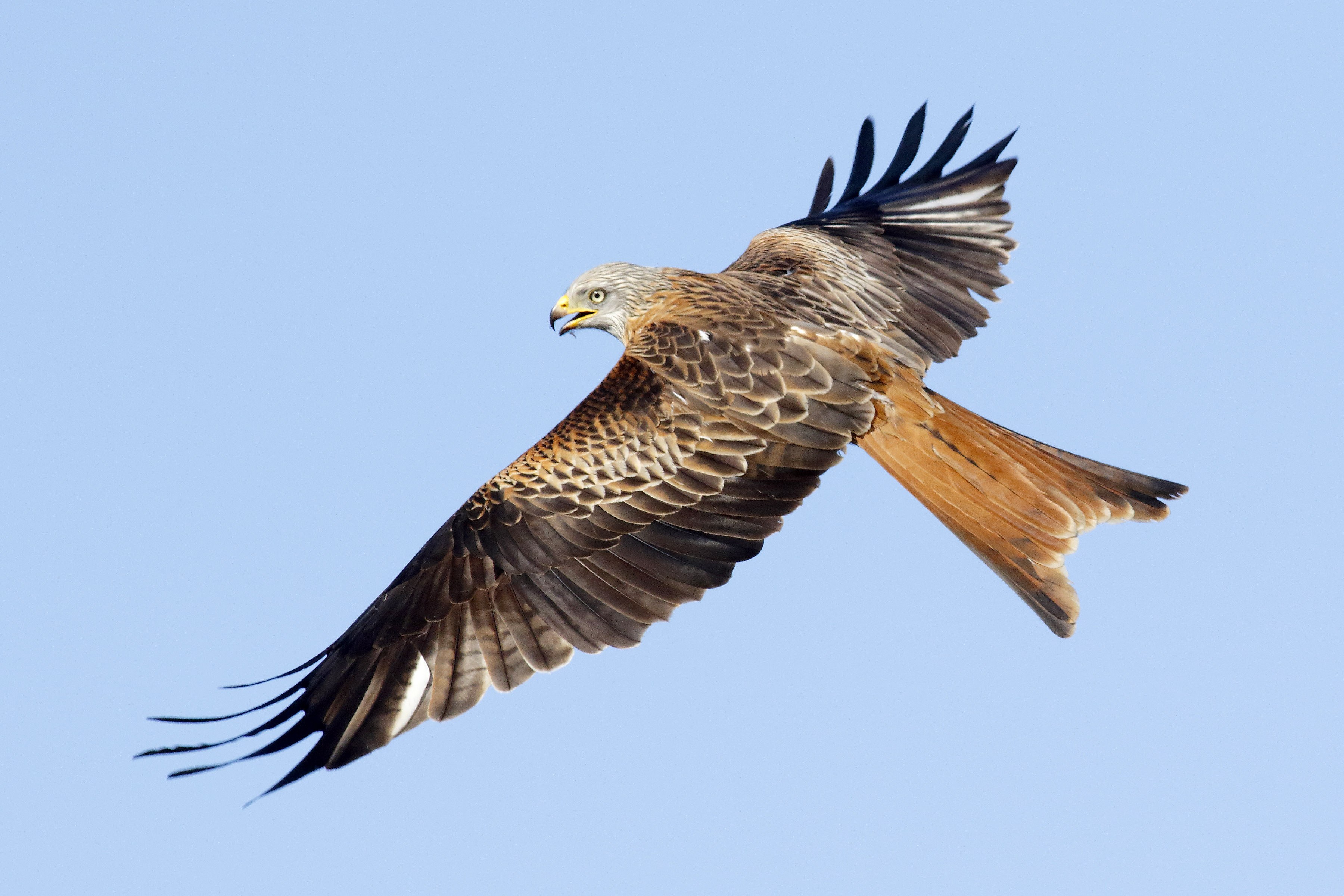
Red kite in flight. Credit: Whitfield Benson
The red kite was once restricted to a small population in central Wales, but reintroduction projects across the UK have transformed its fortunes. Reintroduction in Yorkshire began in 1999, with young birds released at Harewood Estate and by 2012, the project had achieved over 100 territorial pairs and more than 1,000 young fledged in the county. A similar project in Cumbria began in 2010, with the first successful breeding recorded in 2015.
Despite this success, red kites have been slow to spread into the Yorkshire Dales National Park. Encouragingly, sightings have increased in recent years, and birds are now seen more frequently across the Dales.
Illegal killing has previously limited expansion. If this pressure is removed, there is potential for a regular breeding population to establish within the National Park.
Peregrine Falcon
Latin name: Falco peregrinus
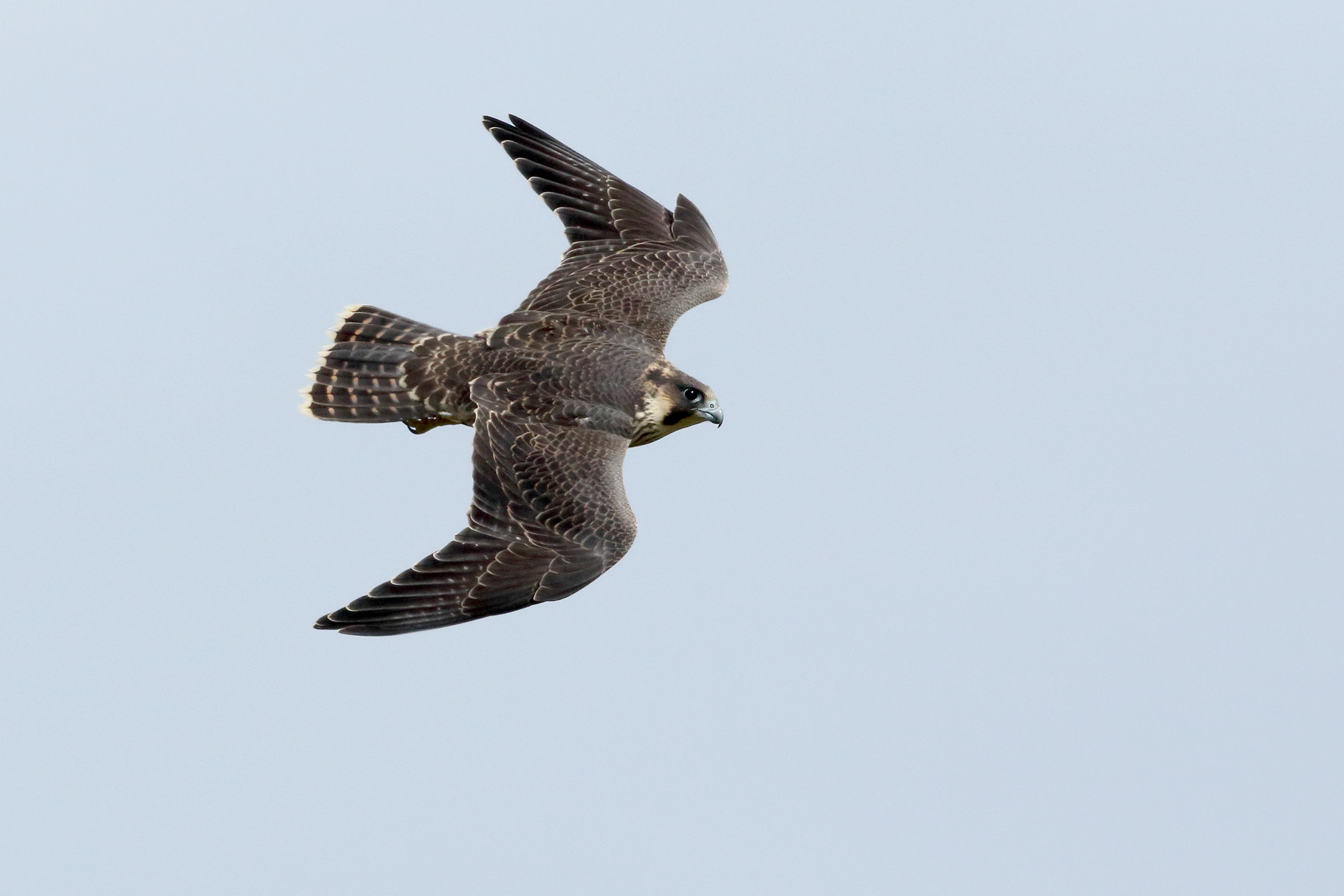
Peregrine falcon in flight. Credit: Whitfield Benson.
The peregrine falcon is one of the most iconic birds of prey in the Yorkshire Dales, known for its extraordinary speed - reaching up to 200 mph during hunting dives.
History and recovery
Peregrines have had a complex history in the UK. Historically valued in falconry and protected by royal decree, they later declined due to persecution and later use of pesticides such as DDT, which caused eggshell thinning. The species began to recover following chemical bans in the mid-20th century.
The species disappeared as a breeding bird in the Yorkshire part of the National Park in the 1960s, but returned in 1978, with gradual spread supported by conservation efforts.
Long-term monitoring has taken place since the 1970s, although reduced fieldwork effort in recent years means trends are now harder to assess.
Where to see peregrines in the Yorkshire Dales
While most nesting sites are protected and not publicised, visitors can see peregrines at Malham Cove during the breeding season, where a viewing scheme has been in place since 2003. This partnership between the Yorkshire Dales National Park Authority and the RSPB allows people to enjoy these birds responsibly while ensuring their protection.
Hen Harrier
Latin name: Circus cyaneus
Hen Harrier
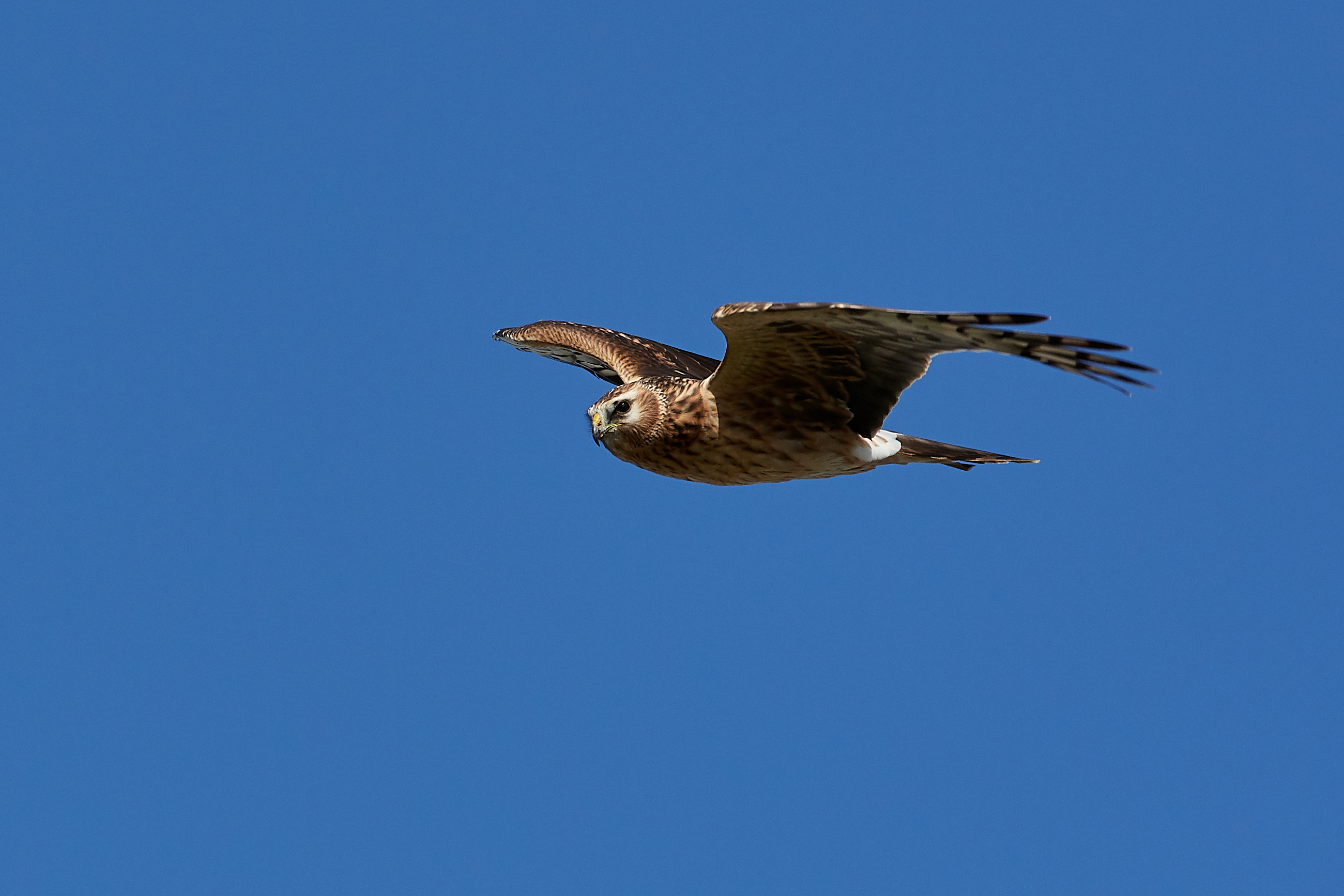
Hen Harrier in flight
The hen harrier is one of the most sensitive and contested bird of prey species in the UK uplands.
Distribution and decline
Historically widespread across Britain, hen harriers have experienced major declines due to habitat loss, particularly in lowland heath, and persecution, especially on moorland managed for grouse shooting.
By the early 20th century, breeding was largely limited to Scotland. Gradual recolonisation brought the species back to northern England, including parts of the Yorkshire Dales, by the late 1960s.
Conservation challenges
Hen harriers prefer heather moorland, which is also used for grouse shooting. This overlap has led to conflict, although, measures such as diversionary feeding can reduce predation on grouse. Despite legal protection, illegal killing and disturbance remain significant limiting factors.
Data highlights the scale of the issue:
- Suitable habitat in northern England could support over 300 breeding pairs
- In 2025, only 39 breeding attempts were recorded in England
Status in the Yorkshire Dales
In the Yorkshire Dales National Park, hen harriers are regularly observed displaying (“sky dancing”) in suitable habitat. Breeding attempts remain inconsistent, with a peak of 12 breeding pairs in 2023, which has not been sustained, with no breeding recorded in 2024 or 2025.
Low survival rates outside the breeding season - often linked to illegal persecution - are a key factor limiting recovery.
Birds of prey in the Dales landscape
Birds of prey are a vital part of the upland ecosystems of the Yorkshire Dales National Park. They help maintain ecological balance and are an important part of the area’s natural heritage.
From the widespread buzzard to the rare hen harrier, these species reflect both positive conservation successes and ongoing challenges in managing upland landscapes.
Supporting birds of prey in the Yorkshire Dales
Protecting birds of prey requires continued partnership working between conservation organisations, land managers and enforcement bodies.
Learn more or report your concerns
Nature Recovery Plan
Find out how partners are working together to create a richer, more connected landscape for nature and wildlife.
Read more about Nature Recovery Plan