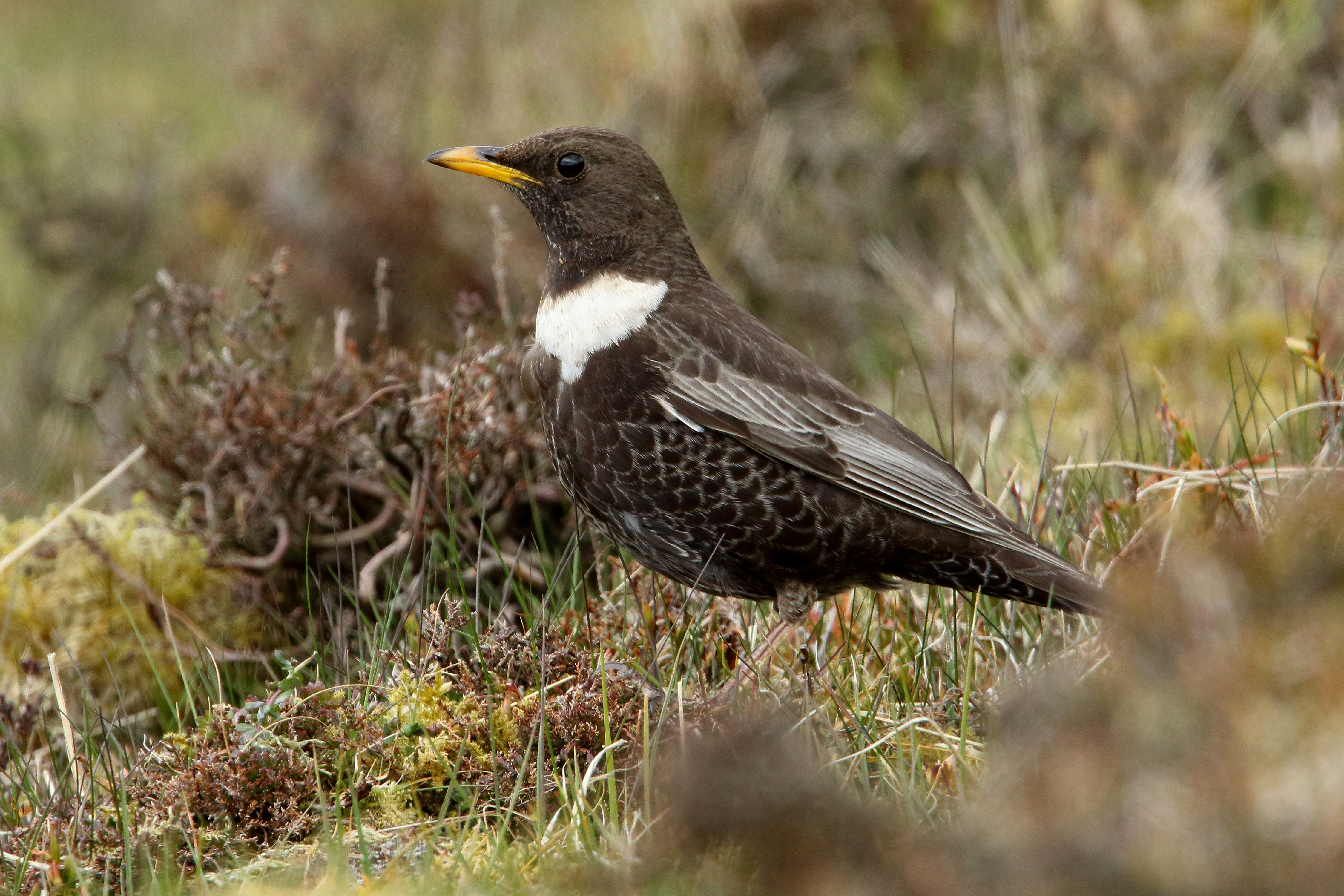
Latin name: Turdus torquatus
The ring ouzel is one of the most characteristic upland birds of the Yorkshire Dales National Park. With its distinctive white crescent across the chest, it can be easily distinguished from the closely related blackbird.
A summer migrant, ring ouzels return to the Dales from mid-March onwards to breed in upland habitats. They are often difficult to spot, but their fluty song and sharp “tac tac” alarm call can give away their presence in remote moorland landscapes.
Where ring ouzels live
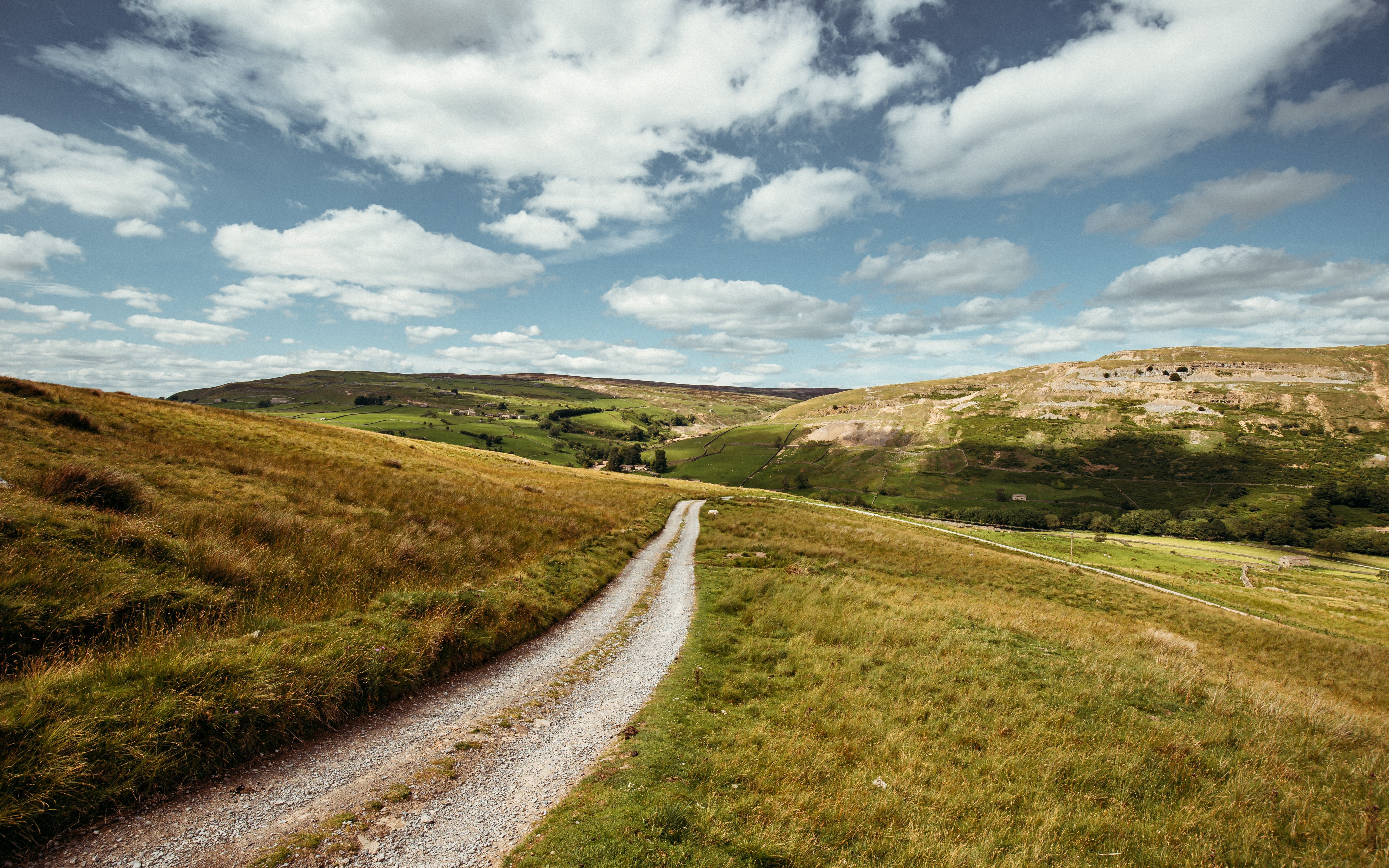
Ring ouzels are strongly associated with the upland landscapes of the Yorkshire Dales, particularly areas that combine open feeding ground with sheltered nesting sites.
In the National Park, they typically nest in moorland gullies and ravines, rocky crags and outcrops, and areas with overhanging vegetation that provide cover. For feeding, they rely on short vegetation, where earthworms and invertebrates are easy to find. Later in the season they survive on a range of berries and upland fruits.
This combination of rugged terrain and open ground makes the Yorkshire Dales an important breeding area for this species.
Seasonal behaviour and migration
Ring ouzels are migratory birds with strong seasonal movements.
Spring and summer (breeding season):
Birds arrive in the Yorkshire Dales from mid‑March and establish territories in upland areas.
Late summer and autumn:
Adults and young birds switch to feeding on berries and fruits as insect availability declines.
Winter:
Ring ouzels migrate south to spend the winter in North Africa, leaving the Dales until the following spring.
Population trends in the Yorkshire Dales
Across the UK, the ring ouzel has experienced a widespread population decline over recent decades. However, the Yorkshire Dales remains an important area for monitoring and understanding long-term trends.
In the early 1990s, the Dales population was estimated at around 200 breeding pairs. A 2012 national survey recorded 193 territories (with a 95% confidence range of 79–314). Comparisons between surveys in 1999 and 2012 suggest the population in the Dales remained relatively stable over that period.
Long-term monitoring in the Dales
One of the best-studied areas for ring ouzel in the National Park is Grassington Moor, in the south-east of the Yorkshire Dales.
Between 1978 and 1993, local naturalist Ian Appleyard carried out detailed fieldwork, identifying around 30 territories. The area was re-surveyed in 2002 and again in 2022, supported by the Our Common Cause project, and in 2022, 8 to 10 territories were still occupied by ring ouzels.
Although survey methods differ, this level of occupancy is broadly consistent with earlier findings, suggesting that the population on Grassington Moor has remained relatively stable over the long term.
Find out more about ring ouzel conservation
Read the Grassington Moor survey report
-
This document contains a report from the Yorkshire Dales National Park Authority (YDNPA) about Ring Ouzels on Grassington Moor. We surveyed 30 territories across this part of the Yorkshire Dales National Park to monitor these red-listed birds. Our findings show that between eight and 10 territories were occupied during the spring and summer of 2022. These results suggest the population has remained stable within the National Park for at least the last 20 years. Most birds now live in the cooler, wetter northern areas, while numbers in the south have unfortunately fallen. We believe that climate change and increased disturbance from recreation may be affecting where these birds choose to nest. You can help us protect these birds while the National Park Authority works to start annual monitoring.
Please be aware that this summary has been generated using AI
Why the Yorkshire Dales matters
The Yorkshire Dales National Park provides the remote upland habitat that ring ouzels depend on for breeding. These habitats are increasingly under pressure elsewhere in the UK.
We are actively protecting moorland and upland fringe habitats, healthy invertebrate populations, and traditional land management practices. All of which are essential in ensuring that the ring ouzel remains part of the Dales landscape for future generations.
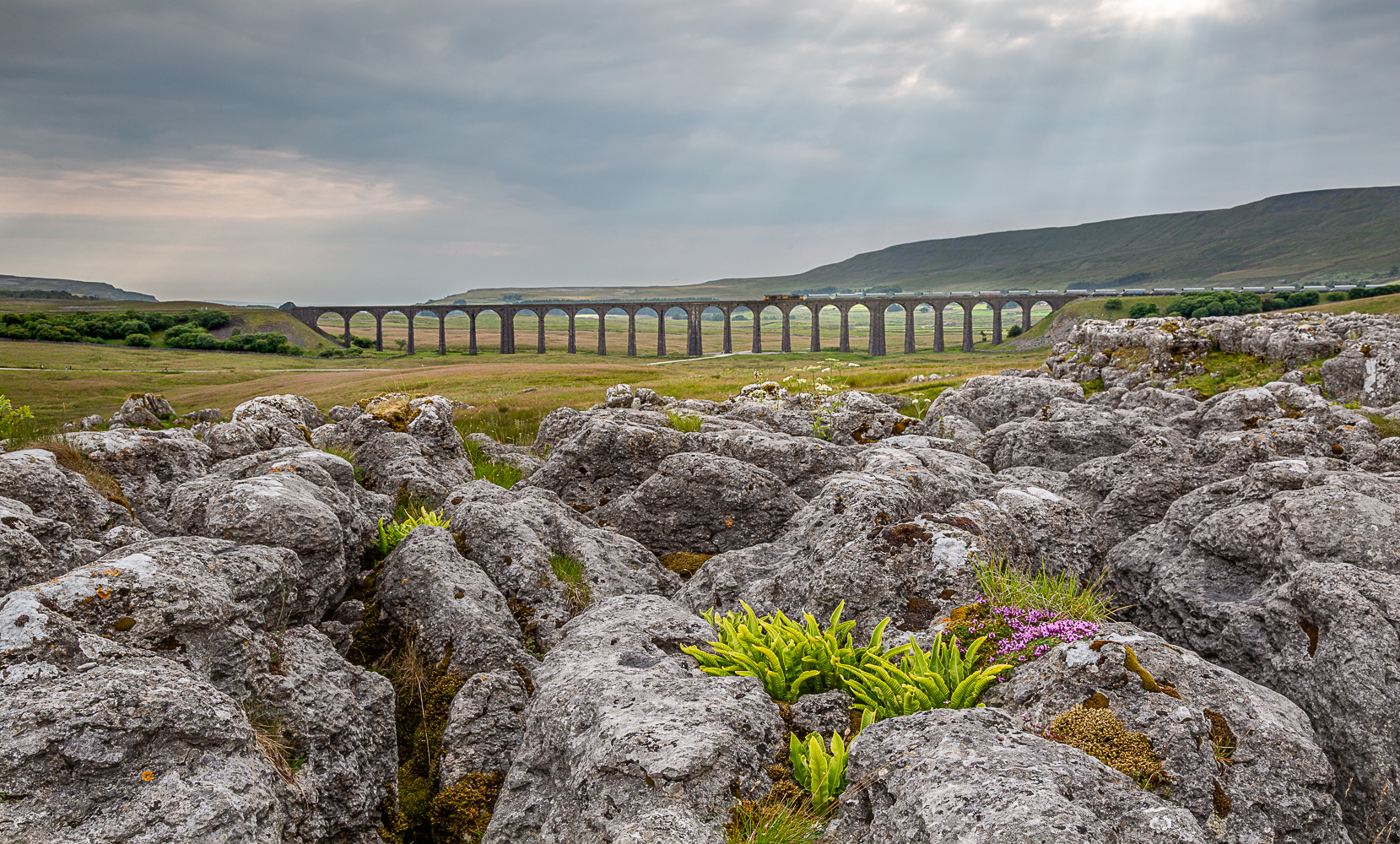
Nature Recovery Plan
Find out how partners are working together to create a richer, more connected landscape for nature and wildlife.
Read more about Nature Recovery Plan