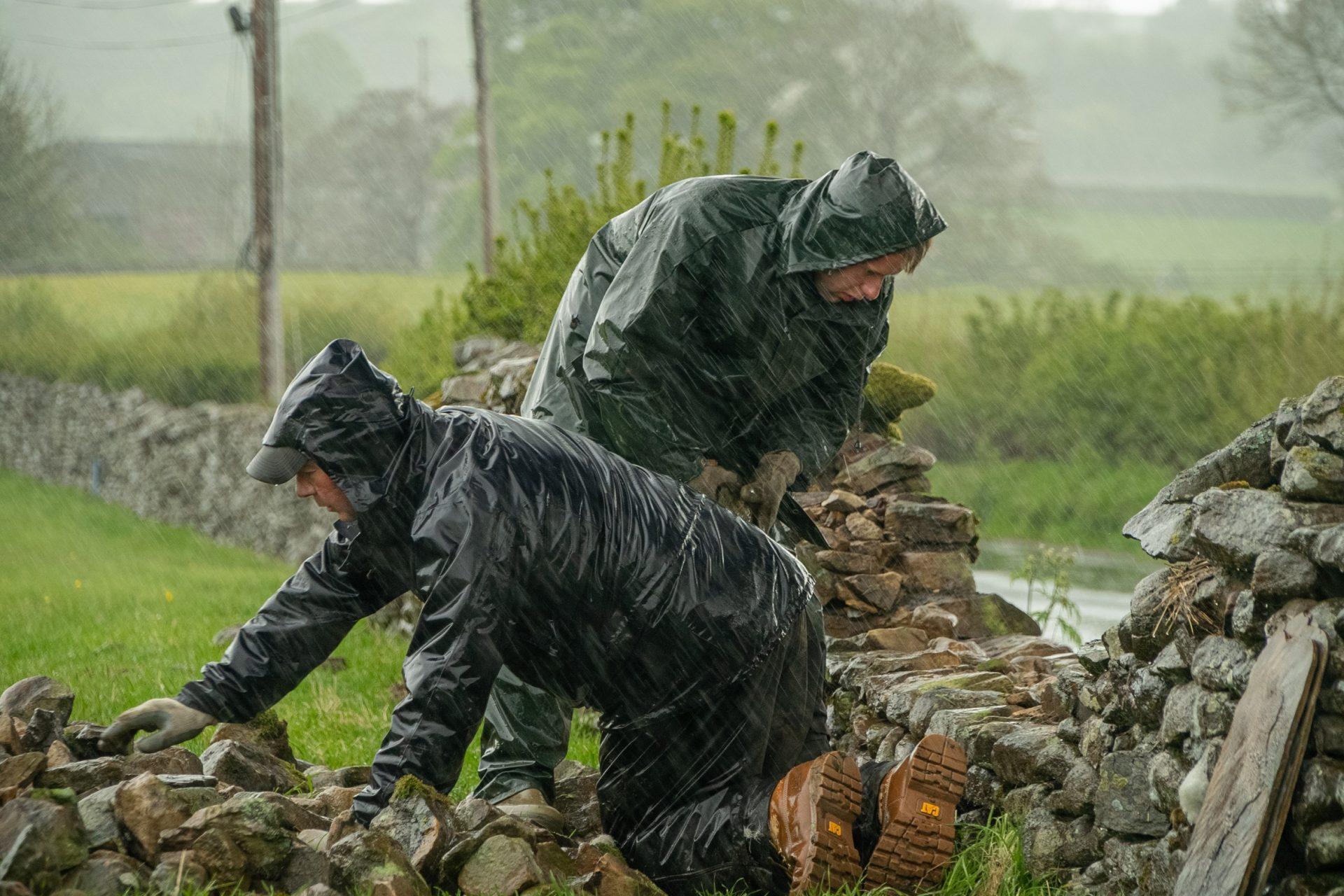
Re-walling the gap - Stephen Bostock (left) and Dave Fullerton
Objective 5.2
Little or no progress
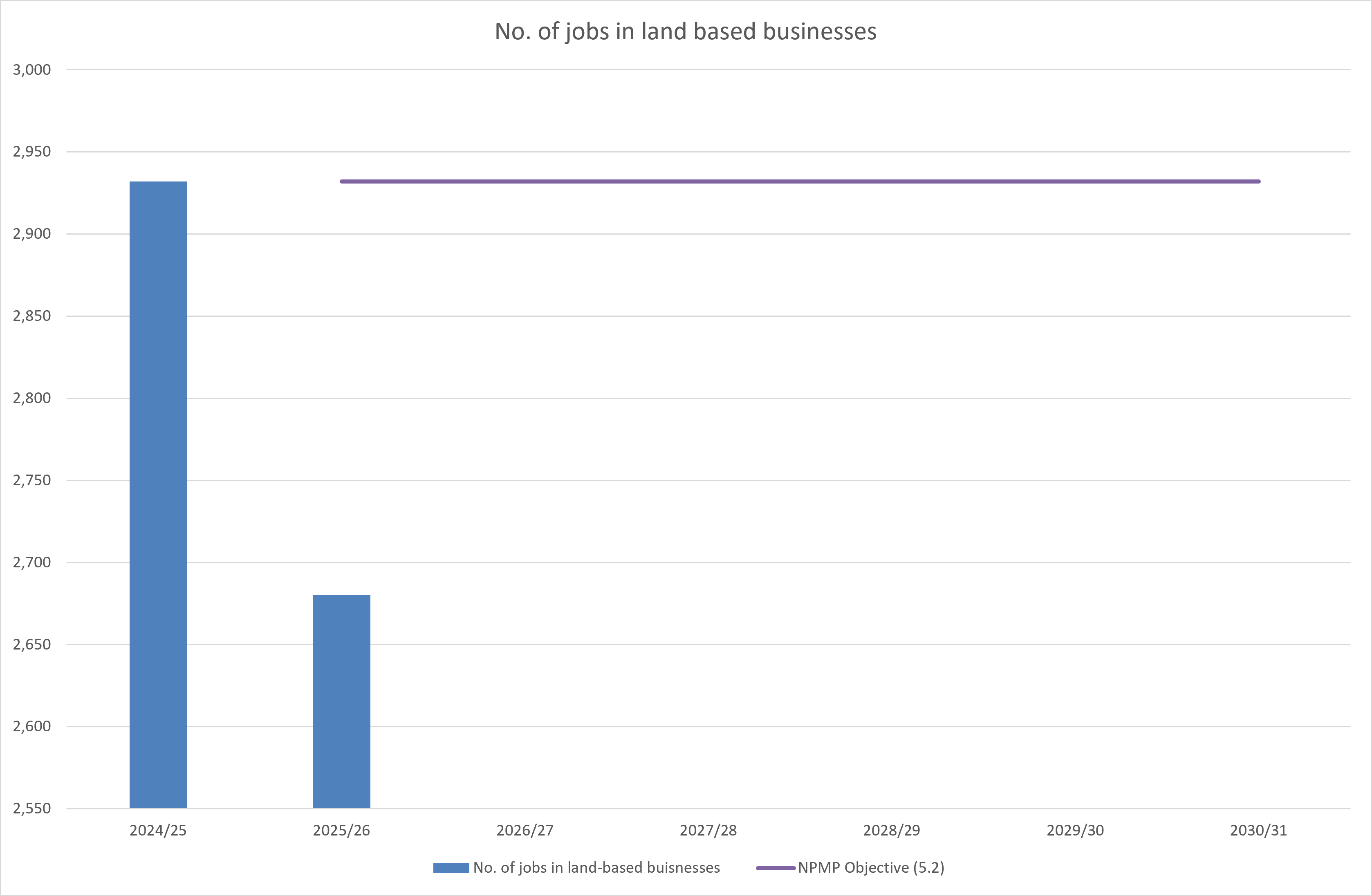
Provide advice, training and support for rural and land-based businesses to help them to innovate, diversify, and secure investment in their natural assets and create ‘green jobs’, so as to retain at least the same number of jobs within the sector.
Progress
The most recent figures (2025) from the ONS’ Inter-Departmental Business Register showed that the number of jobs in the farming and land management sector in the National Park stood at 2,680, a decrease of 252 on the previous year.
Rationale
The land-based sector provides around 3,000 local jobs. The transition to Carbon Negative is an ambition of the Y&NY Combined Authority and a main driver for its developing Economic Growth Plan. Whilst hill farming often uses traditional techniques, there is also considerable scope for innovation – in land management techniques; food production (see 2.1); forestry (see C5, 1.8, and 1.2); and business diversification – to add value and improve profitability. Advice and training would help businesses to decarbonize, develop more sustainable business practices and broaden their income streams. The new Local Plan should contain planning policies that support new development that will help grow, diversify or improve the viability of farming and other essential rural land management work. Dales landowners are ideally situated to benefit from public and private investment in their natural assets (e.g. objectives 2.2 and 2.3), and the opportunities to improve land and habitats (1.1, 1.2, 1.3, 1.7).
Lead organisations
York and North Yorkshire Combined Authority; Cumbria Local Enterprise Partnership
Supporting organisations
Yorkshire Dales National Park Authority, Forestry Commission; Dales Farmer Network; North Yorkshire Council, Westmorland & Furness Council.
Cost over 5 years
Funding shortfall