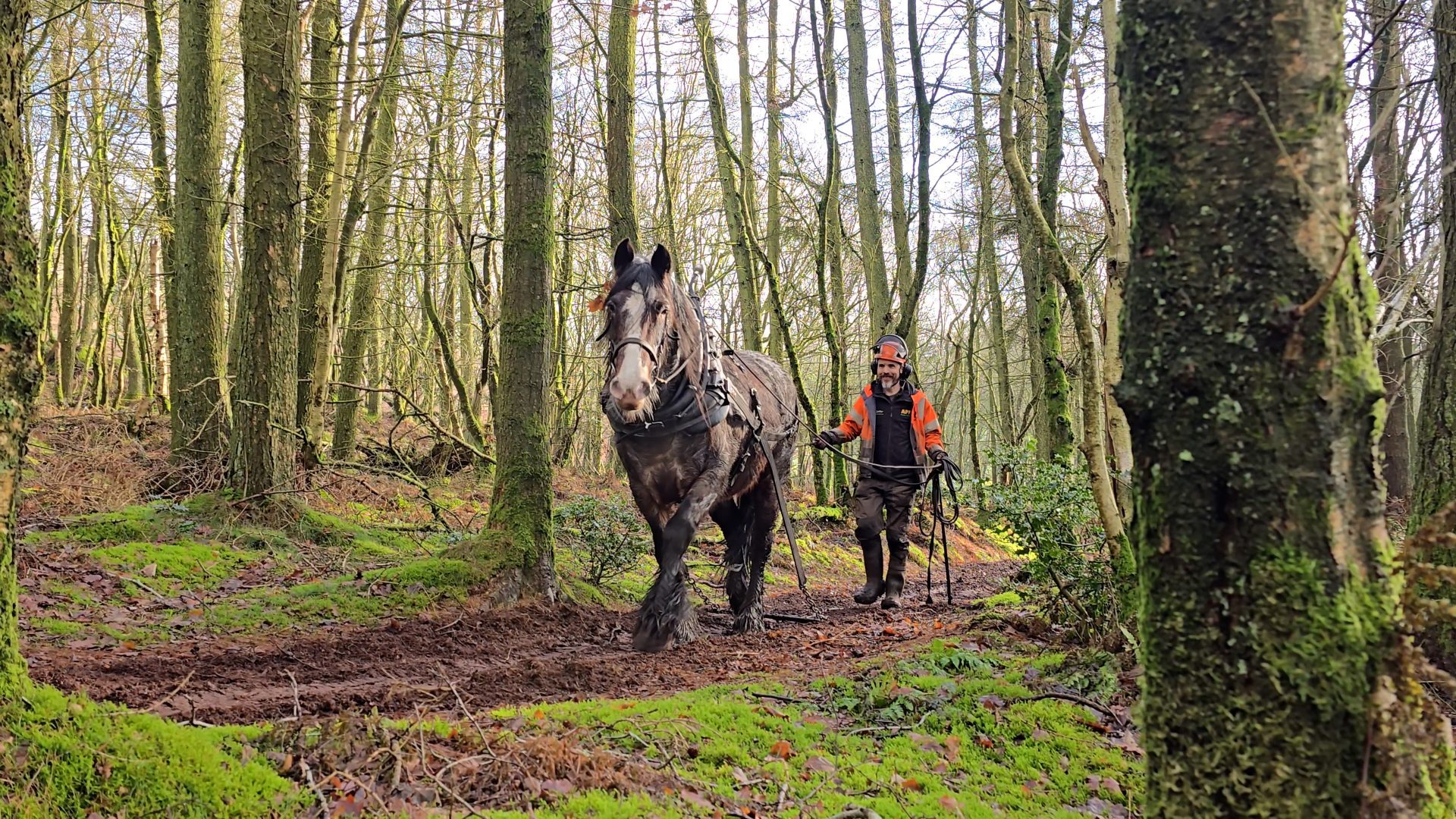
Tom Dutson and Dutchess Snigging in Cleatop Wood.
Objective 1.8
Little or no progress
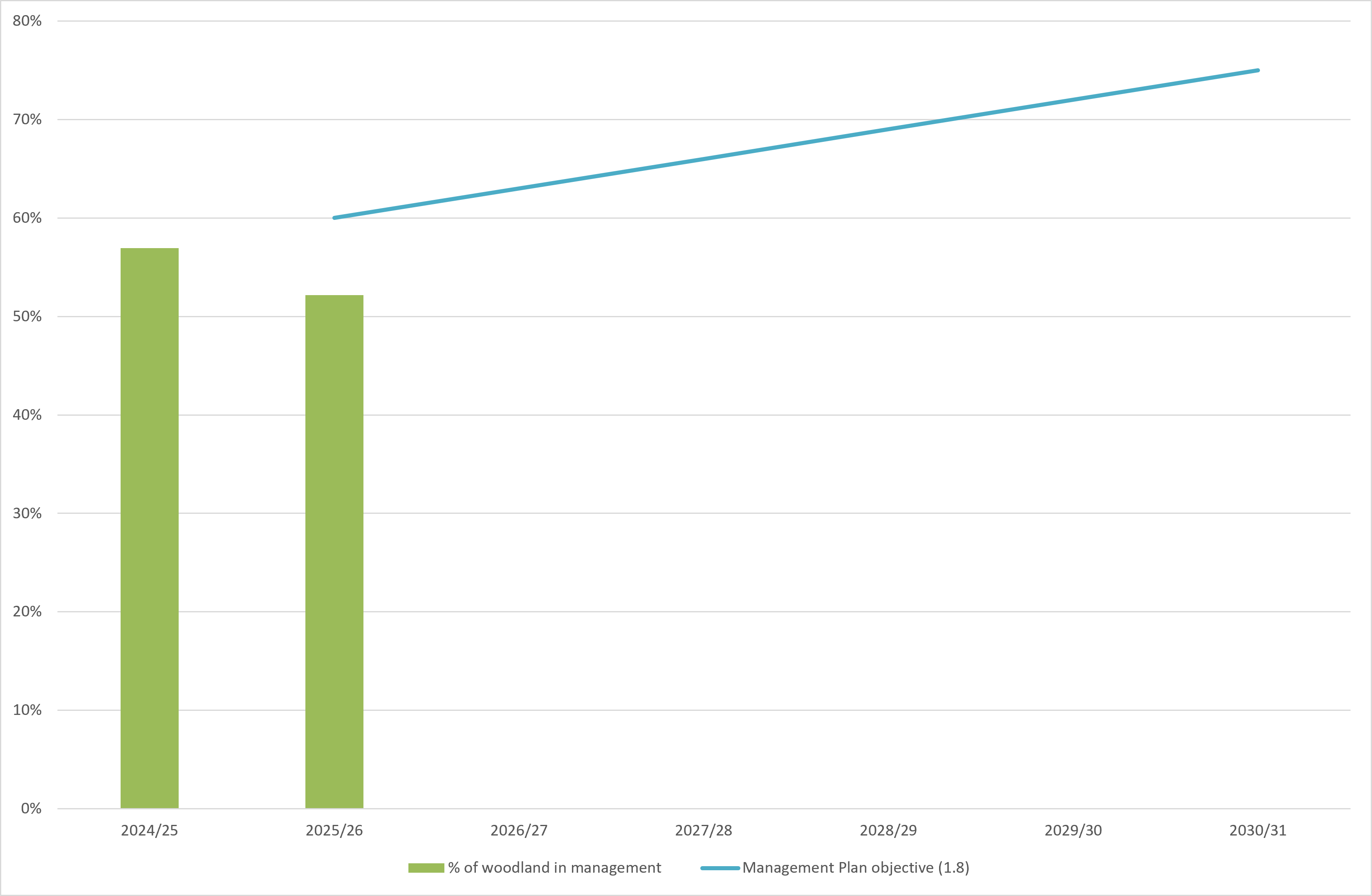
Support farmers and landowners to bring 75% of woodland into sustainable management by 2030, including positive management of conifer plantations to increase habitat for red squirrels and black grouse.
Progress
The area of woodland has increased significantly in the last 5 years (see objective 2.3) but the proportion in management has continued to decrease – down from 57% in 2025 to 52% in 2026.
Rationale
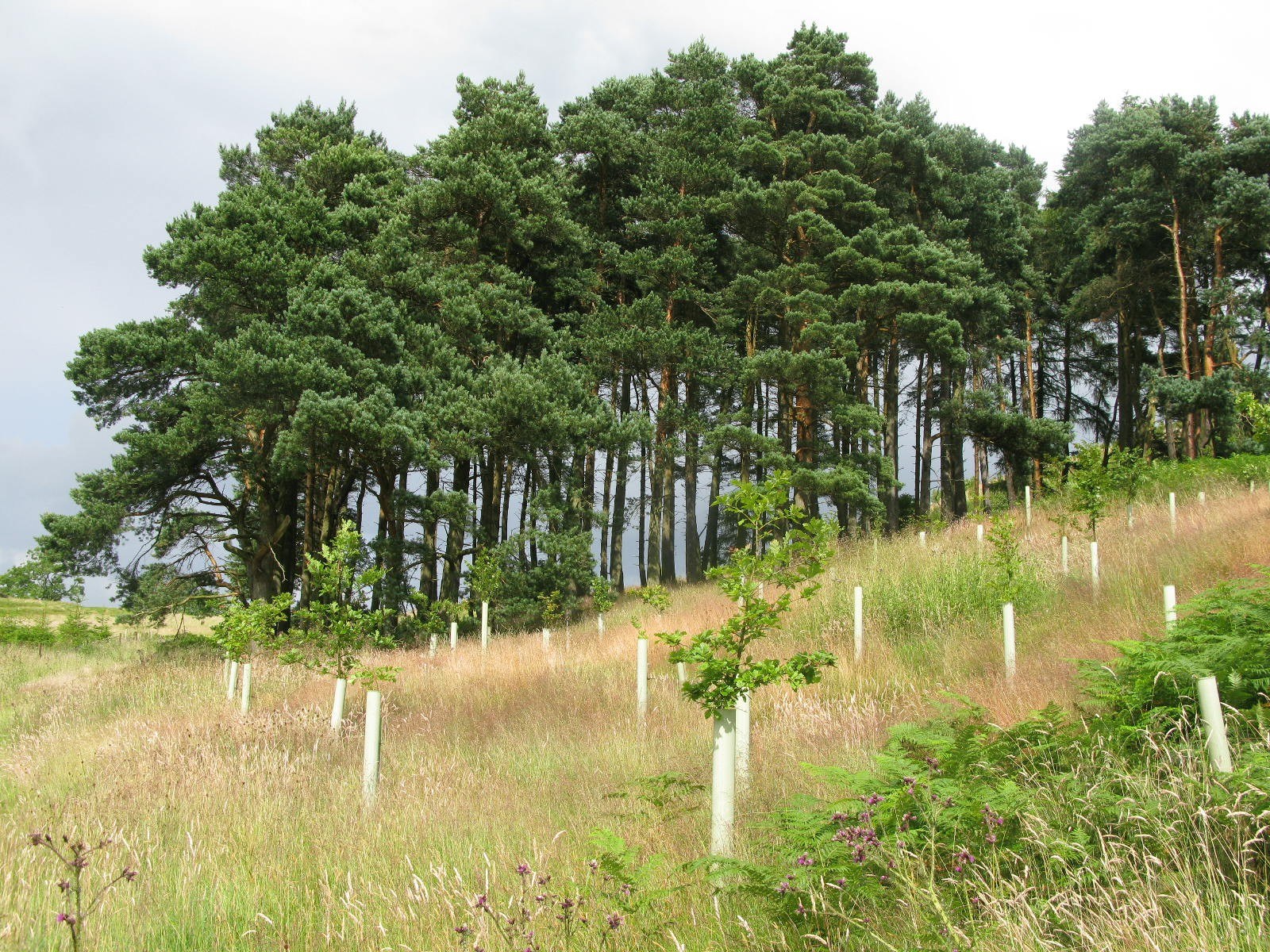
Whilst the total area of broadleaved woodland is low (just under 3%), the National Park contains 18 different types of ancient semi-natural woodlands. Good management of woodland improves biodiversity, increases resilience to climate change, and helps to slow down water run-off (see objective 2.3). 61% of Dales woodland is in management (2024), a drop from 65% in 2018. The Nature Recovery Plan sets an ambition to get 75% of all woodland into management. Achieving the objective would require around 840 ha of existing woodland to be brought into management over the next 5 years. See objectives 1.2, 1.7, and 2.3 for creation of new forms of native woodland and scrub.
Lead organisation
Forestry Commission
Supporting organisations
Natural England; Yorkshire Dales National Park Authority; Woodland Trust; Dales Woodland Forum; White Rose Forest; Yorkshire Dales Millennium Trust
Cost over 5 years
Funding shortfall