Species rich grassland
Objective 1.7
On course
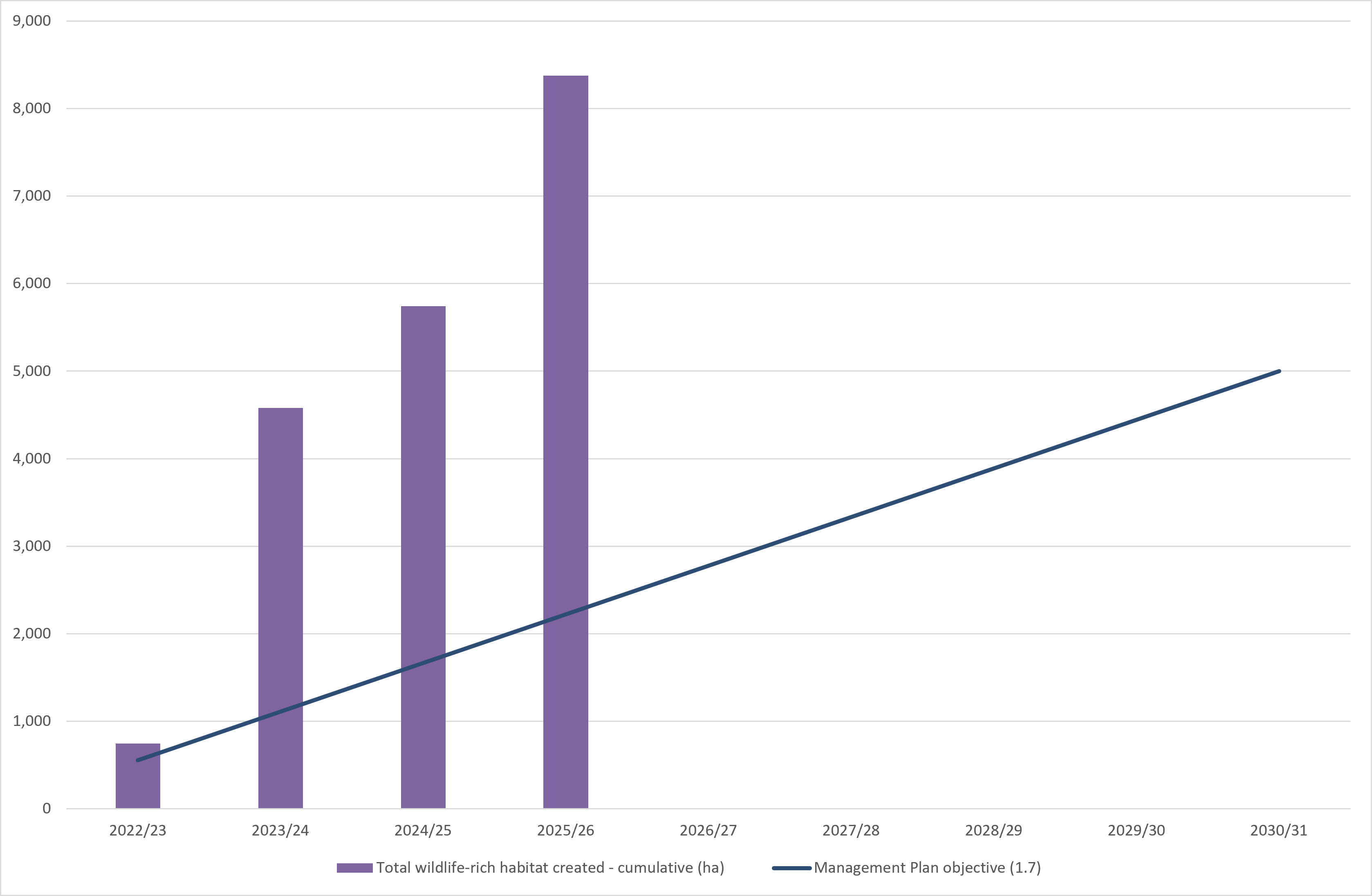
Support farmers and landowners to restore or create 5,000 hectares of new wildlife-rich habitats outside protected sites by 2030 (from a 2022 baseline).
Progress
National datasets for monitoring progress are still being developed. An updated and expanded set of figures from Defra are due to be published towards the end of 2026. In the meantime, the Authority’s own records currently estimate that well over 8,000 ha of wildlife-rich habitat has been created since 2022. This includes almost 6,900 ha of hydrologically restored peatland (see objective 2.2); and almost 1,300 ha of new native woodland (see objective 2.3).
Rationale
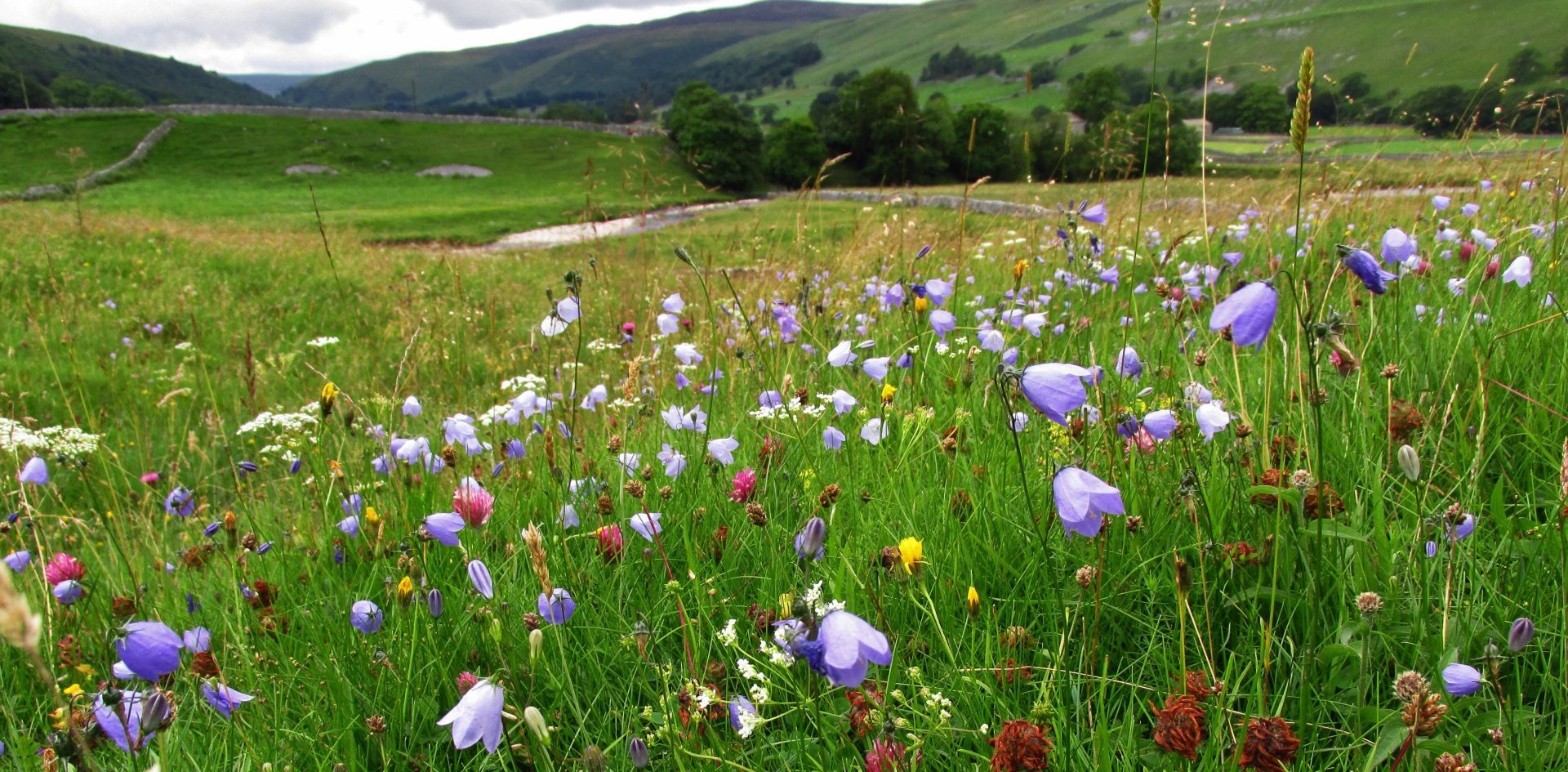
National target set by Government as part of the Protected Landscapes Targets and Outcomes Framework. Target relates to land outside protected sites like SSSIs and uses 2022 as the baseline year for measurement. Creating new wildlife-rich habitat is a key priority within the Government’s Environmental Improvement Plan and is essential to reversing the decline in nature. There is enormous potential to increase the amount of wildlife-rich habitat in the Yorkshire Dales. The largest contributions will come from restoring heavily degraded peatland (see 2.2) and planting broadleaved woodland (2.3) but will also include many other smaller, fragmented but hugely important habitats, like the iconic Dales’ hay meadows. The priority areas will be identified in the new Local Nature Recovery Strategies being produced for York & North Yorkshire, Cumbria and Lancashire. In the long-term, at least 35,000 ha could feasibly be created but the final amount will be dependent on the scale of the funding (both public and private) that is available – something which is currently unclear.
Lead organisation
Natural England; Yorkshire Peat Partnership
Supporting organisations
Forestry Commission; Environment Agency; Yorkshire Dales National Park Authority; Woodland Trust; White Rose Forest; National Trust; Cumbria Peat Partnership; Yorkshire Dales Millennium Trust; Cumbria Local Nature Partnership; Westmorland & Furness Council.
Cost over 5 years
Funding shortfall