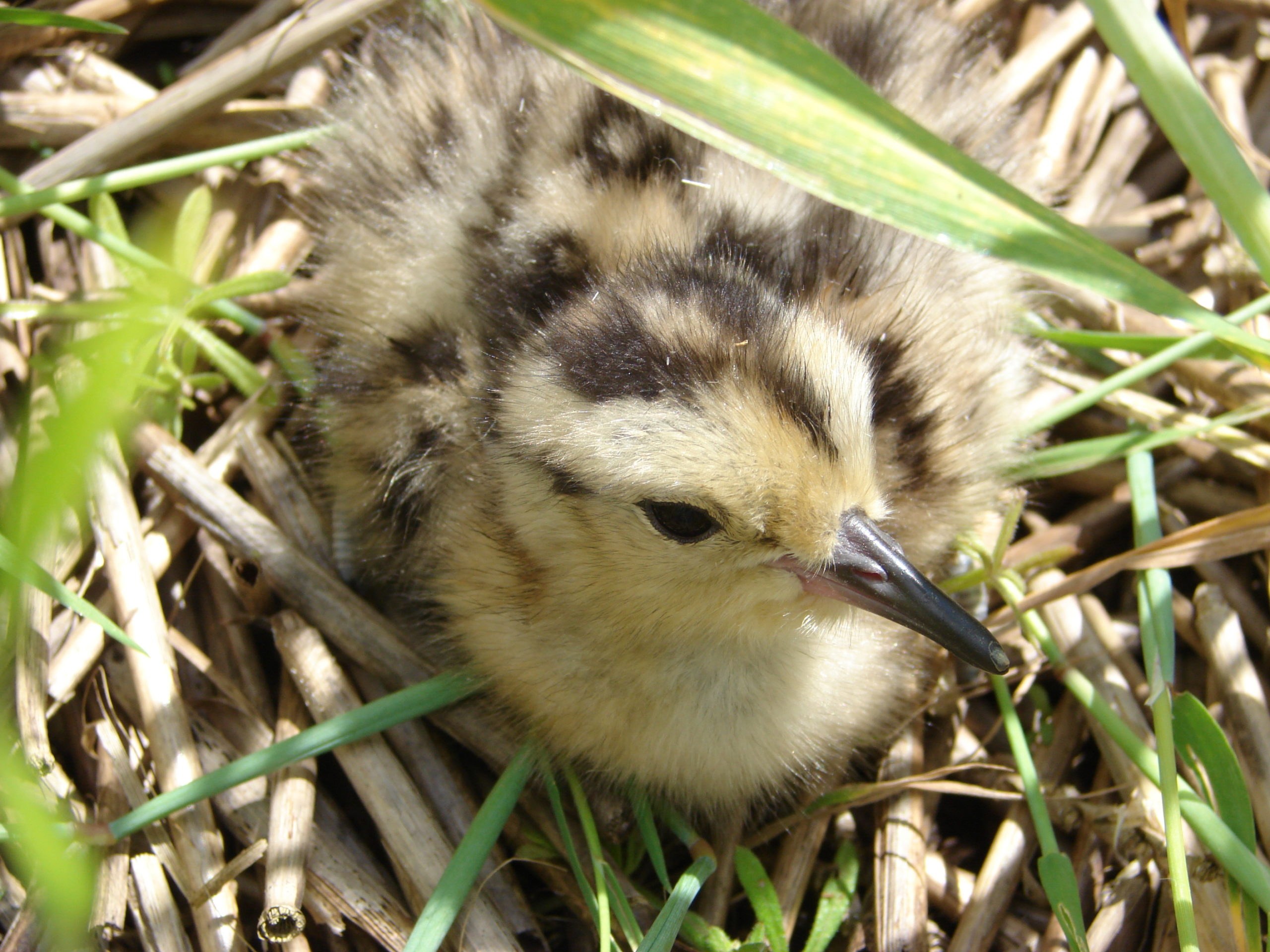
Curlew chick
Objective 1.4
On course
Ensure that recovery plans are in place and being implemented for all ‘priority wildlife species’ by 2030, so that 85% of those species have stable or increasing populations by 2035.
Funding needed
This is one of the 'transformational' objectives that does not currently have the funding needed to achieve it.
Progress
The Yorkshire Dales Biodiversity Forum has assessed that there are existing national recovery plans in place for 24 of the 40 priority wildlife species (which need bespoke conservation actions). The Forum’s technical advisory group will be extracting all the actions relevant to conservation work in the YDNP into a local recovery plan for each of these species and will be determining the actions that are needed and writing plans for each of the 16 species that are not already covered by national recovery plans.
Rationale
The Government has a legally binding target in England to halt the overall decline of species abundance by 2030. Successful conservation of species depends mostly on creating and managing the right sorts of habitats (see objectives 1.1-1.3, 1.5, 1.7, 2.2 and 2.3). However, there are some priority species – including Curlew and Black Grouse – which require additional, bespoke conservation action in order to thrive. The Nature Recovery Plan for the Yorkshire Dales National Park identifies 40 such species (referred to there as ‘Category 1’ species). There is currently only effective monitoring for 20 of these – usually through environmental non-governmental organisations and local naturalist groups. So, before progress can meaningfully be measured there is considerable preparatory work to do to. In the meantime, targeted action will continue for some species, and new action will be started with a view to meeting the Nature Recovery Plan’s long-term objective of 90% of species in category 1 having populations in the National Park that are either stable or increasing by 2040 (See also objective 1.6).
Cost over 5 years
Funding shortfall