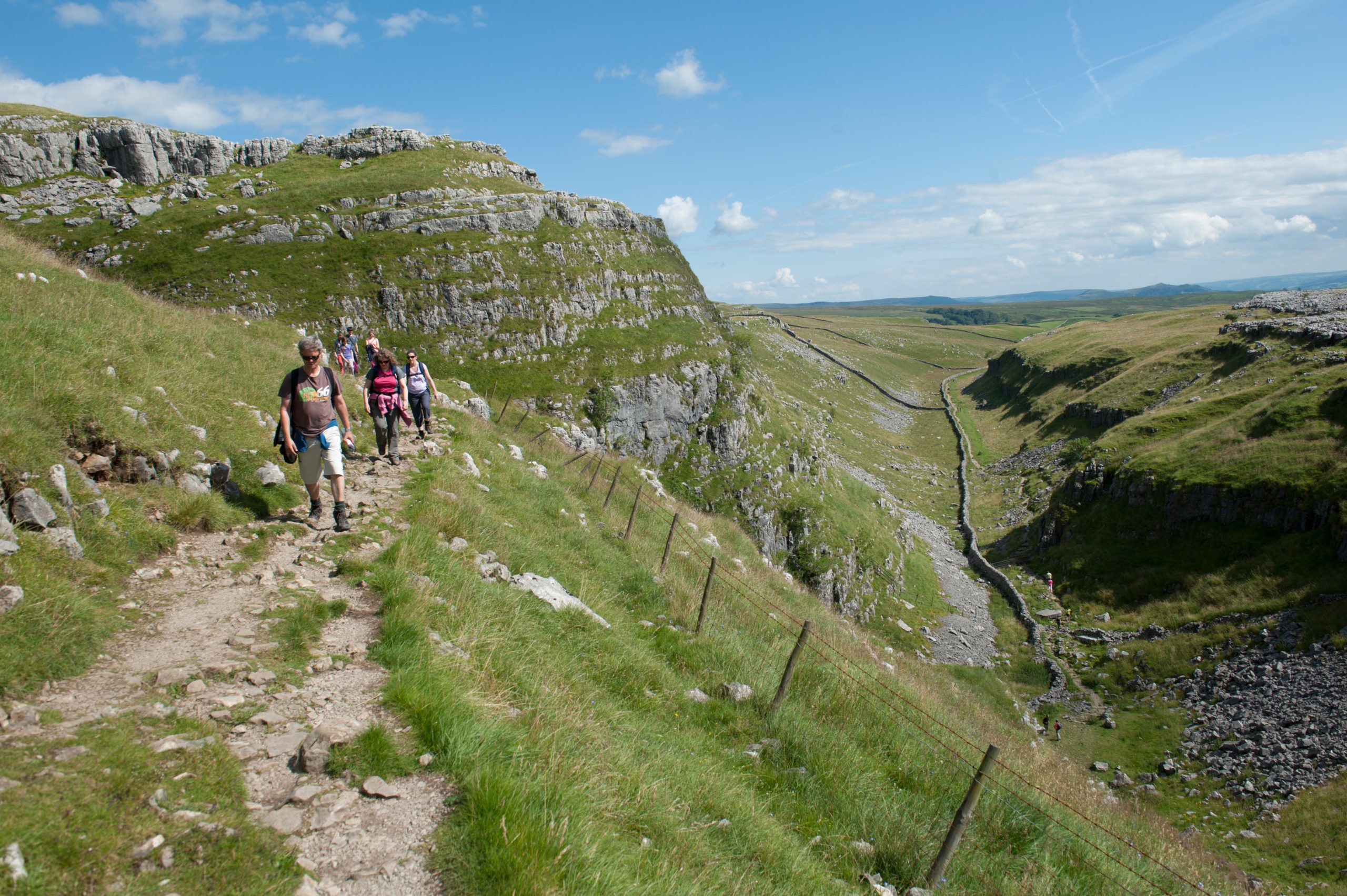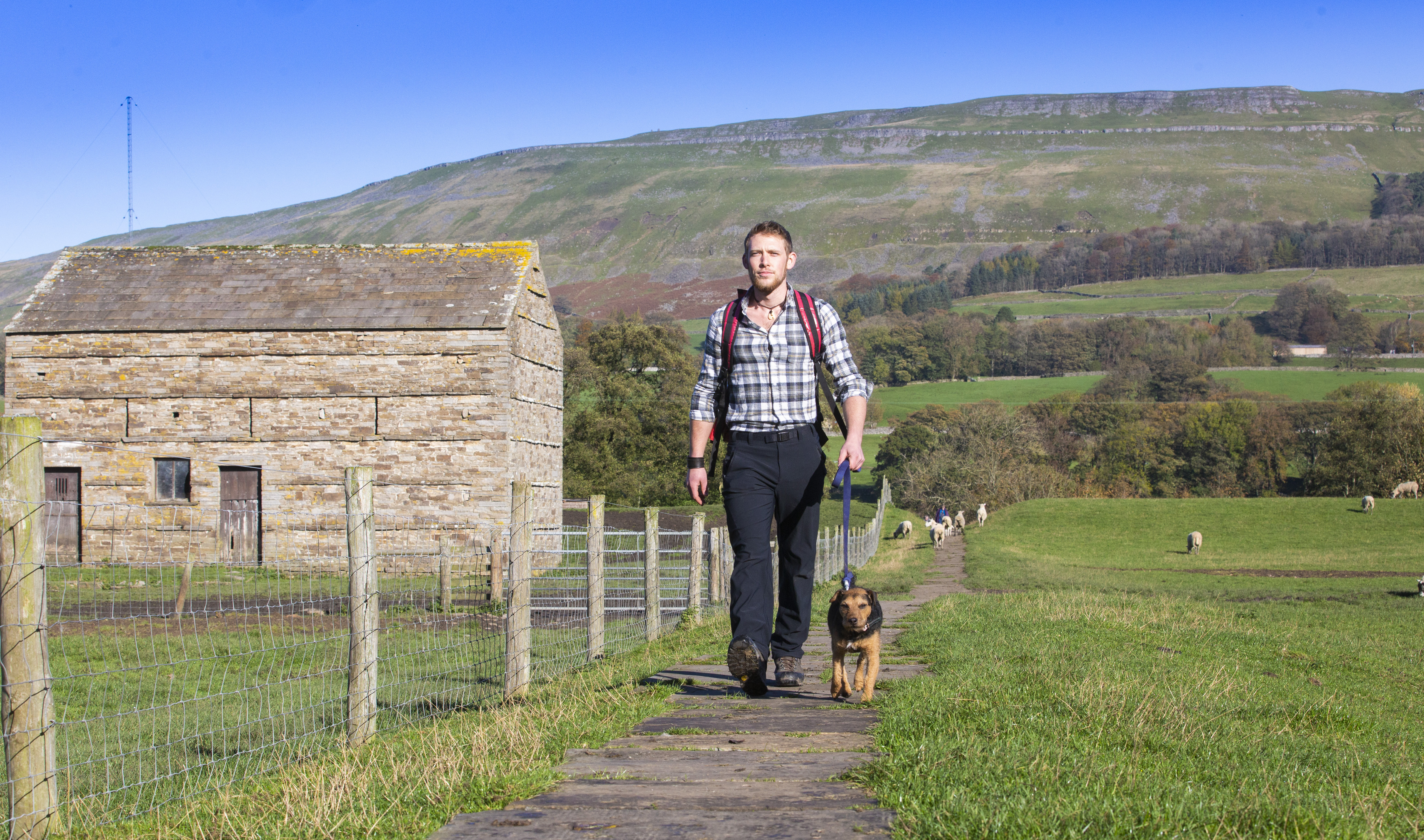
Every year millions of dogs get to stretch their legs and enjoy the wide open spaces and stunning landscapes of the Yorkshire Dales National Park. There’s such great exploring to be done and many dog-friendly establishments to unwind in.
Tips on walking with your dog
Keep your dog on a lead on public rights of way and in fields where livestock are present.
Ground nesting birds
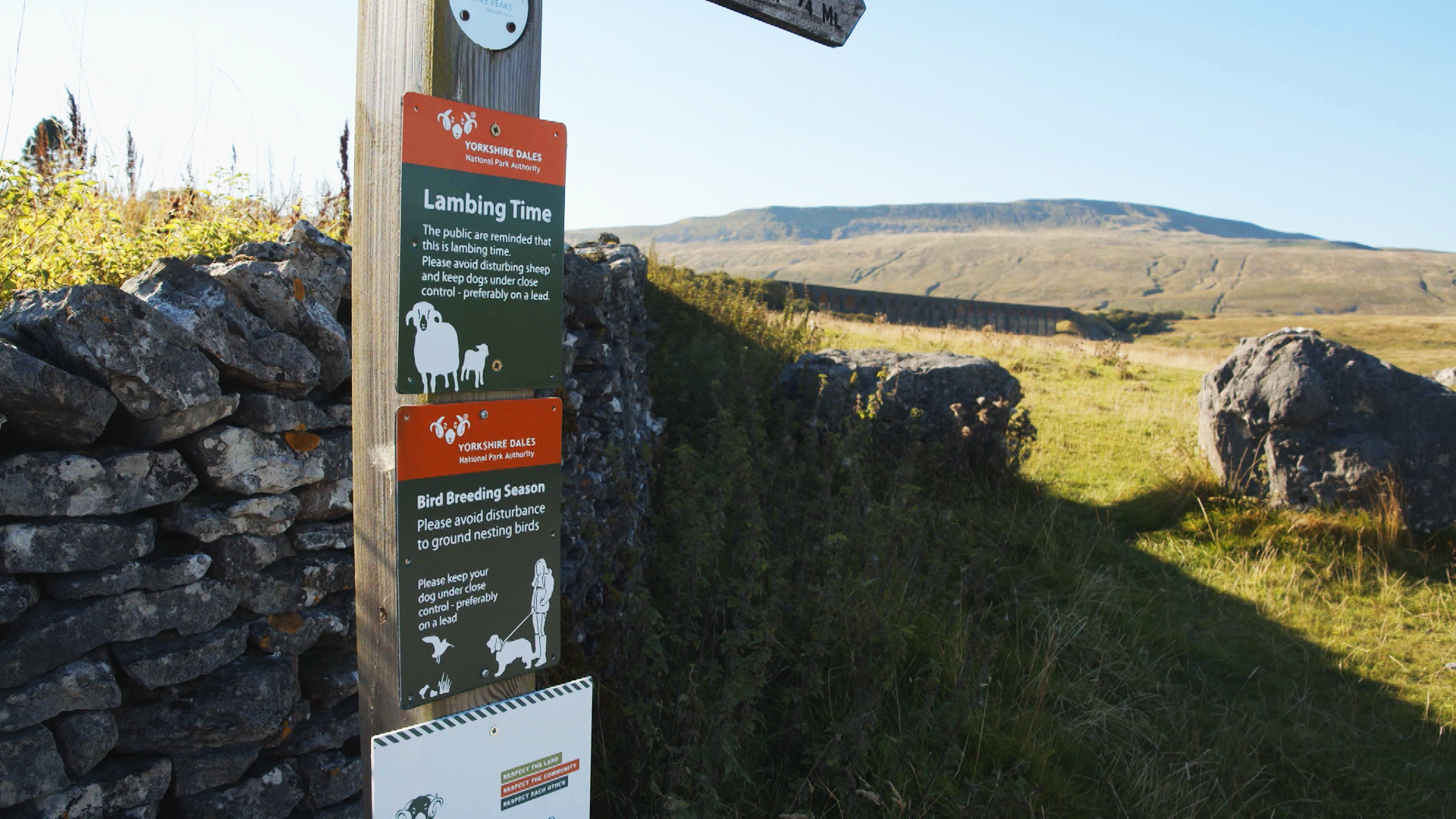
Ground nesting birds are easily disturbed by dogs and fly away leaving the nest cold, vulnerable or abandoned completely. From March to July, please keep you dog on a short lead.
What to do around cattle
Be prepared for cattle to react to your presence, especially if you have a dog with you. Move quickly and quietly, and if possible walk around the herd. Don’t panic or run. Most cattle will stop before they reach you. If they follow, continue walking calmly and quietly.
When walking with dogs in fields with cattle, the advice is to avoid getting between cows and their calves. Keep your dog under close control on a lead but don’t hang onto your dog if you are threatened by cattle – let it go and allow the dog to run to safety. This offers the best chance of a safe outcome to both you and your dog.
If you feel threatened by animals protecting their territory or young, do not run. Move to the edge of the field and, if possible, find another way round.
Pick up after your dog
Toxocariasis can be passed onto livestock, dogs, humans and even into the soil.
Not everyone likes dogs. Please be considerate and keep your dog on a lead when around other people.
Limestone scenery
The spectacular limestone scenery includes hazards a dog could fall into such as caves, limestone pavement and sinkholes. Please stick to the paths.
Staying cool
When it gets hot in the summer months consider if you should be taking your dog for longer walks and if you do, try to walk them in the cooler parts of the day. Find out how to take care when exercising your dogs and how to look out for heatstroke on the RSPCA website.
Sheep worrying
All livestock suffers greatly from being attacked or chased by dogs, with farmers suffering the hard financial consequences of lost stock. The NFU reported a 10% increase in sheep worrying incidents in 2025, with livestock fatalities costing the farming community nearly £2m.
A farmer is allowed to kill the dog if it’s worrying their livestock.
As pet ownership increases and more people spend time in the countryside there is the potential for instances of livestock worrying to grow.
If your dog attacks livestock and , the Police have powers to prosecute. This power was increased in March 2026 under The Dogs (Protection of Livestock) (Amendment) Act 2025, which was introduced to combat the rising number of dog attacks on farm animals.
Key changes include:
- Definition of ‘worrying’: Physical contact is not required for an offence – ‘worrying’ includes chasing, running at, or causing fear or panic to livestock.
- Definition of ‘livestock’: The law now explicitly includes camelids such as alpacas and llamas.
- Locations: The law now covers incidents occurring on public footpaths, roads, and bridleways – not just within fenced agricultural fields.
- Unlimited fines: The previous maximum fine of £1,000 has been removed. Courts can now impose unlimited fines for livestock worrying.
If you see a dog on the loose worrying livestock in the Yorkshire Dales report it to North Yorkshire Police.
Places to go with your dog
Explore a range of dog-friendly businesses and accommodation providers in and around the National Park.
Dogs in rivers and streams
Some flea and tick treatments contain chemicals that may enter rivers and streams when treated pets swim or are washed. Residues can also be transferred from treated pets to bedding, which may then enter watercourses when bedding is washed. These chemicals can remain active for weeks and may harm aquatic insects, which are an important part of healthy river ecosystems.
The Government is reviewing the impact of these chemicals on watercourses. In the meantime, please be aware of how treatments may enter the environment. For advice on the products you use, speak to your vet or retailer, and visit the GOV.UK website for further information.
Watch out for advisory signage on gates and posts, or call into a National Park Visitor Centre for more advice.
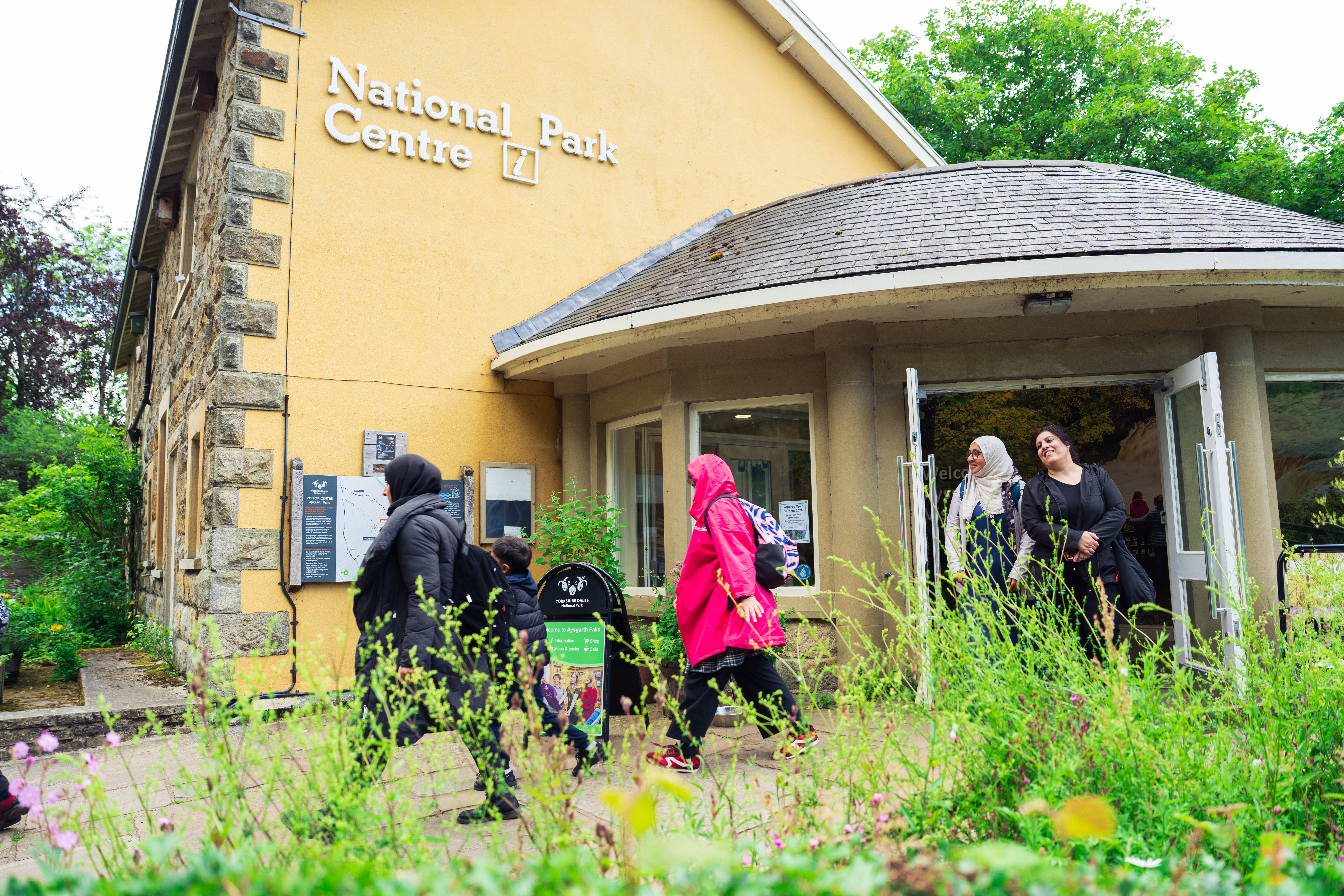
National Park Visitor Centres
Find visitor information, walking maps, local knowledge and practical advice at our National Park Visitor Centres.
Read more about National Park Visitor Centres