The living tradition of cheesemaking in the Yorkshire Dales
Tuesday 9 September, 2025
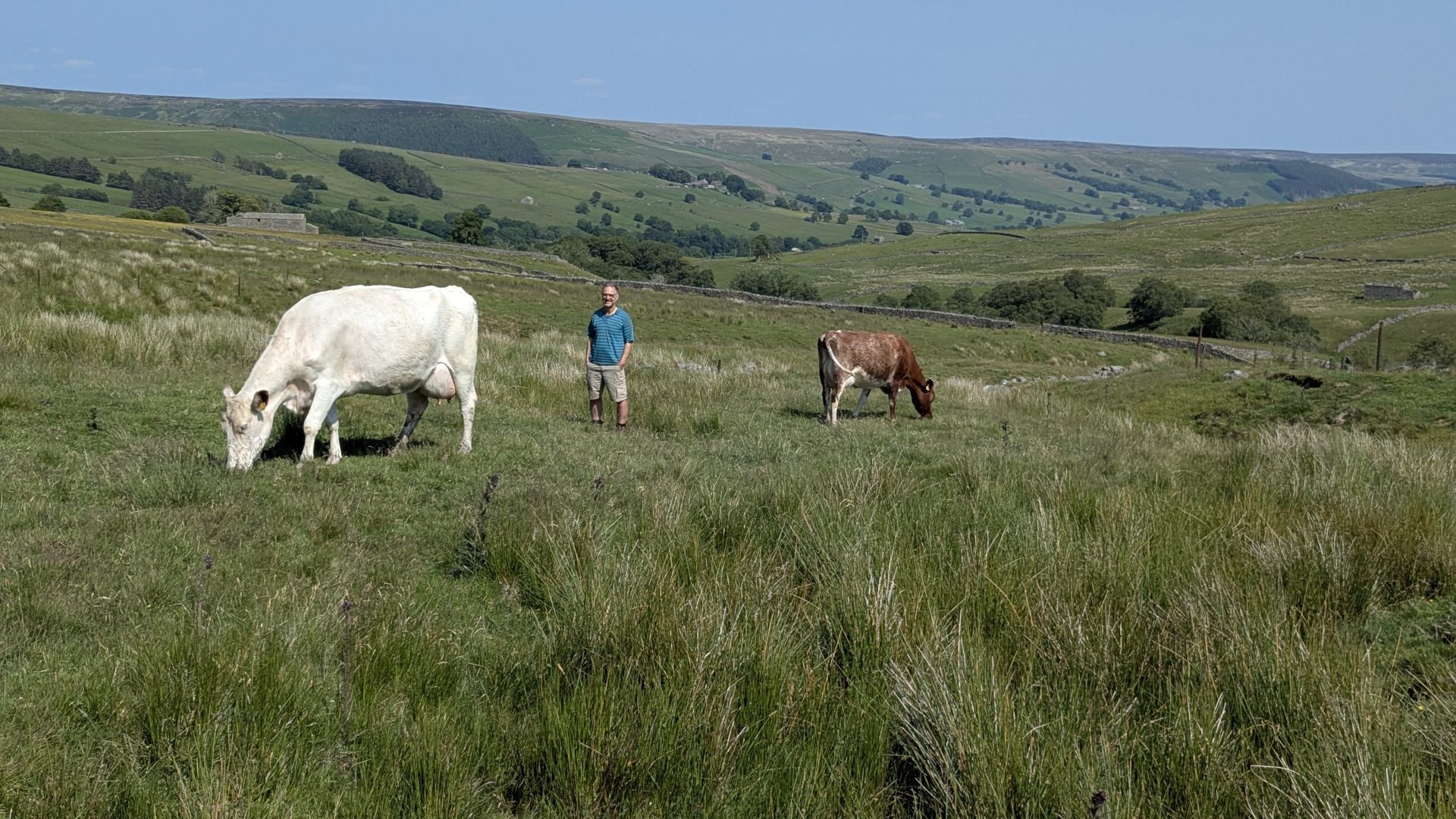
Dales farmer and cheesemaker Andrew Hattan of Stonebeck Cheese with his Northern Shorthorn dairy cows. Credit: YDNPA
By
Katy Foxford
Katy is the Tourism Support Officer with the YDNPA
More from
Katy Foxford
It is becoming increasingly hard to find traditional, unpasteurised soft cheeses from France, and other countries, in the UK. From Reblochon to Camembert de Normandie, these characterful cheeses are disappearing from shelves due to Brexit-related trade friction, tighter regulations, and the challenges of importing raw milk products.
But, while some continental favourites grow scarce, the Yorkshire Dales has its own thriving tradition of raw milk cheesemaking. Here, small producers show how place, season and soil shape flavour – proving that soft, live cheeses are very much alive on British soil.
So, what makes these raw milk cheeses so distinct?
Raw milk cheese is made with milk that hasn’t been pasteurised (heat-treated). This means the milk keeps all of its natural bacteria, yeasts and moulds – also known as ‘natural microbiome’ – along with the natural enzymes that, together, give cheese its depth of flavour and strong ‘sense of place’.
Soft cheeses in particular allow these natural bacteria and moulds to grow, which creates these unique flavours and makes it very difficult to replicate in mass production. Add in the changing seasons, the weather, the animals, the land, and even the air, and no two batches ever taste quite the same.
Why do so few make it and why is it hard to make?
- Strict regulations – food safety rules around raw milk are very tight; cheesemakers must follow rigorous hygiene standards and testing to ensure their cheeses are safe to eat
- Small scale – raw milk cheeses are usually made by hand in small batches, using traditional methods rather than industrial machinery; this takes more time and care
- Seasonal and variable – because the milk changes with the seasons, recipes often need adjusting batch by batch; large factories prefer consistency, so it’s rare to see raw milk cheeses made at scale
Shorter shelf life – live cheeses are more fragile and need careful storage, making them trickier to distribute widely
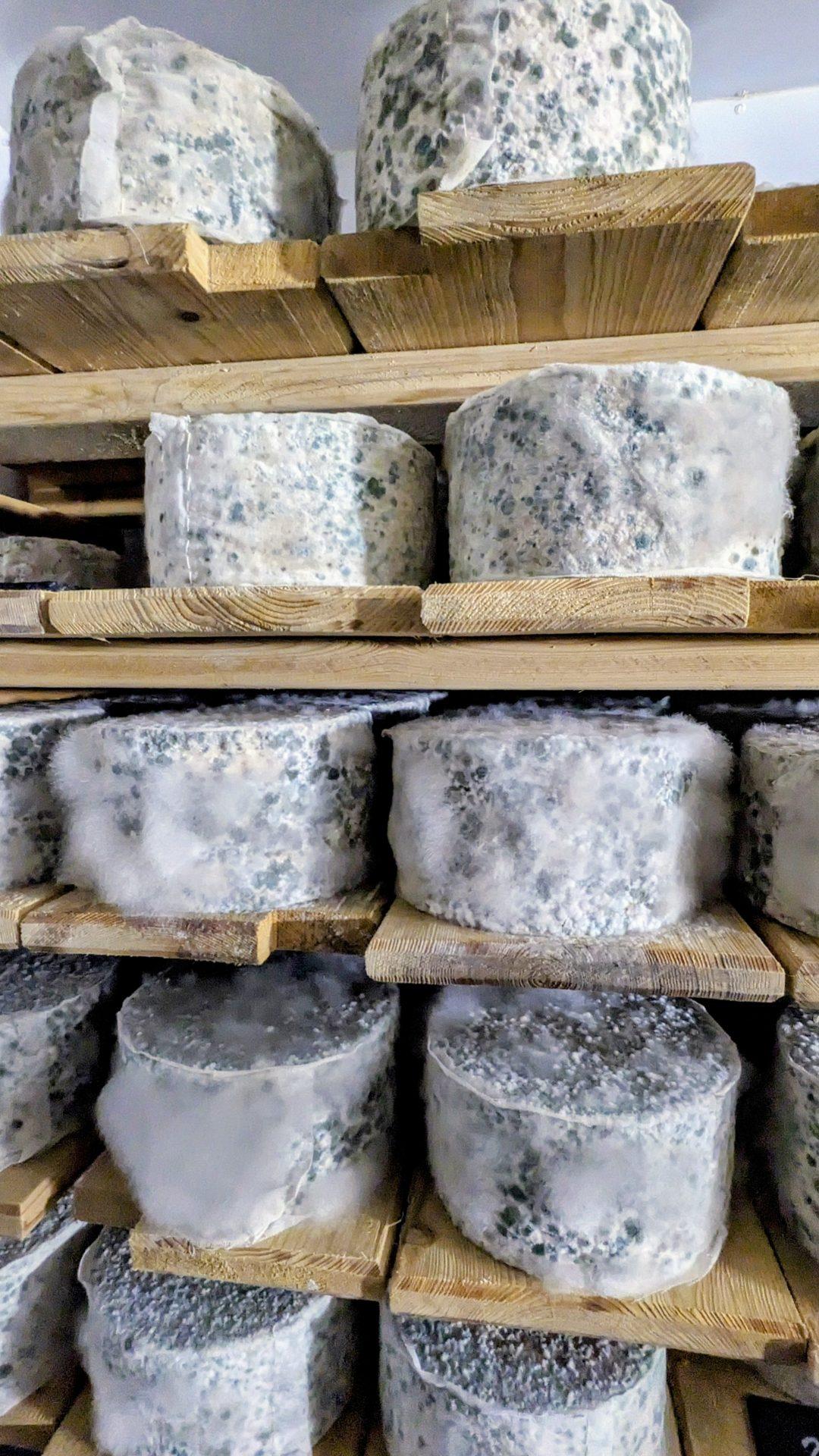
Stonebeck cheese going through the maturation process Credit: YDNPA
Local raw milk and sustainable producers in the Dales
At Lowfields Farm Dairy, a regenerative farm on the edge of the Dales, cows graze rotationally on rich, biodiverse pastures. By building soil health, protecting watercourses, and grazing livestock slowly and naturally, Lowfields is part of a growing movement of putting the environment first – producing both excellent cheese and a healthier farming system.
Stonebeck Cheese is made on a small farm in Nidderdale, using milk from rare Northern Dairy Shorthorn cows. The farm focuses on low-impact, traditional methods such as grazing the cows on species-rich pasture. They only make their cheese when the cows are naturally in milk, making it truly seasonal and sustainable.
Based in Wensleydale, Curlew Dairy produce their signature Hebden Goat cheese using raw milk from a small herd of goats that graze naturally on local pasture. The dairy uses low-energy, traditional methods with minimal machinery, and all cheesemaking is done by hand in small batches.
As well as producing their own cheese, The Courtyard Dairy is a hub for championing sustainable, traditional cheese. Working closely with small-scale British farmers and cheese producers, they support low-impact, pasture-based dairying and raw milk production. Many of the cheeses they stock are made seasonally, using milk from native breeds that are better suited to local landscapes and climate, helping to preserve both the environment and Britain’s cheesemaking heritage.
The rich history of dairying and our local cheese producers in the Dales is celebrated in an annual Cheese Festival, celebrating local produce at sites across the National Park. Held this year from 10 to 19 October 2025, the above businesses will join many others in hosting in-house events and demos so that you can learn more about how the cheese is produced, and even sample the products themselves – often paired with other great local produce.
We have put together some taster videos to give you an inside glimpse into what to expect when you book onto one of our 2025 Cheese Festival events. We look forward to seeing you there!