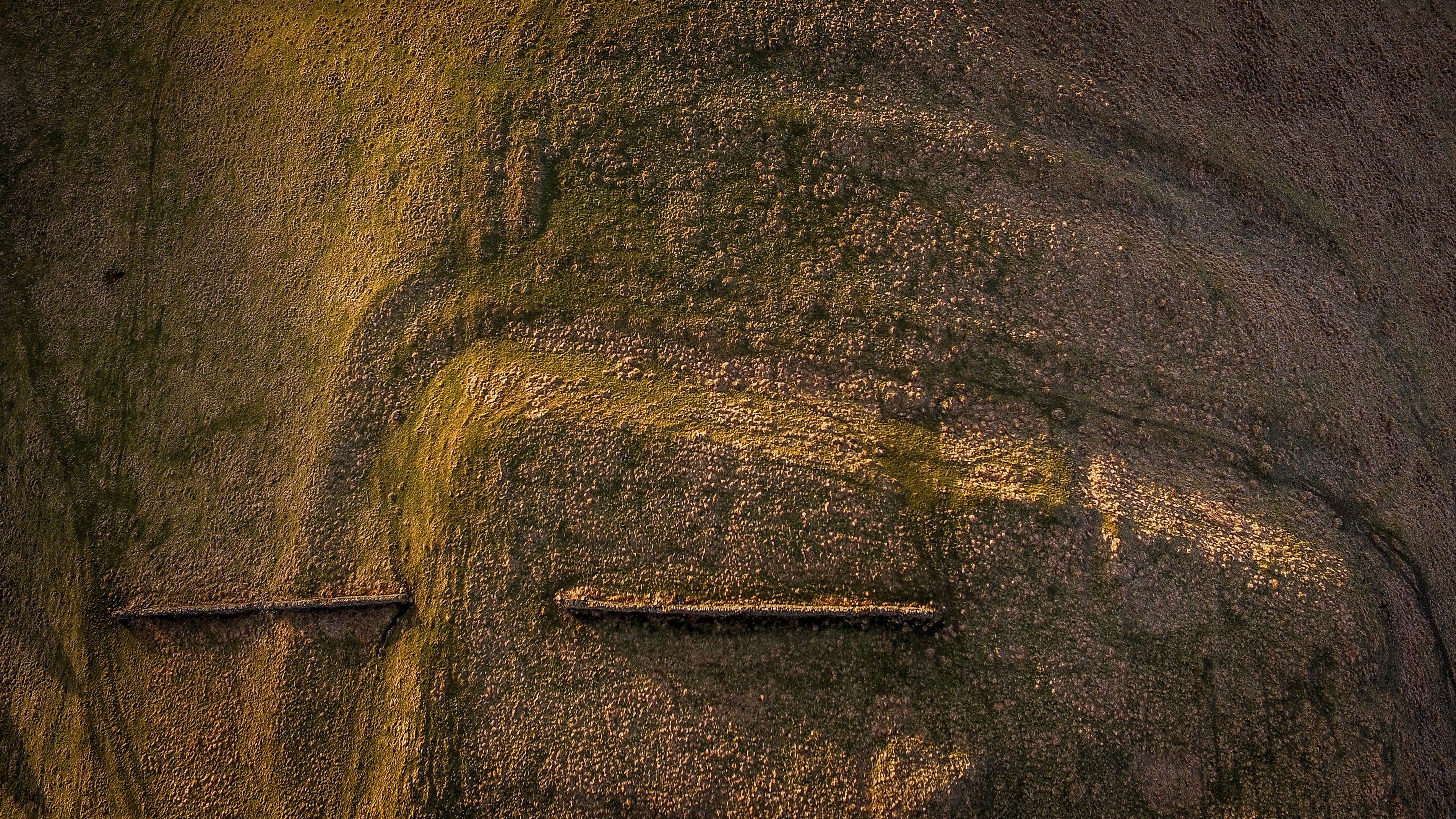
Since around the Medieval period, miners worked a system where they leased small blocks of land following lead ore veins. These blocks were known as meers. This system is often referred to as customary mining law. Lines of closely spaced mounds are usually an indication of this style of mining. Good examples of customary mining law lead mining in Wharfedale can be seen on Grassington Moor.
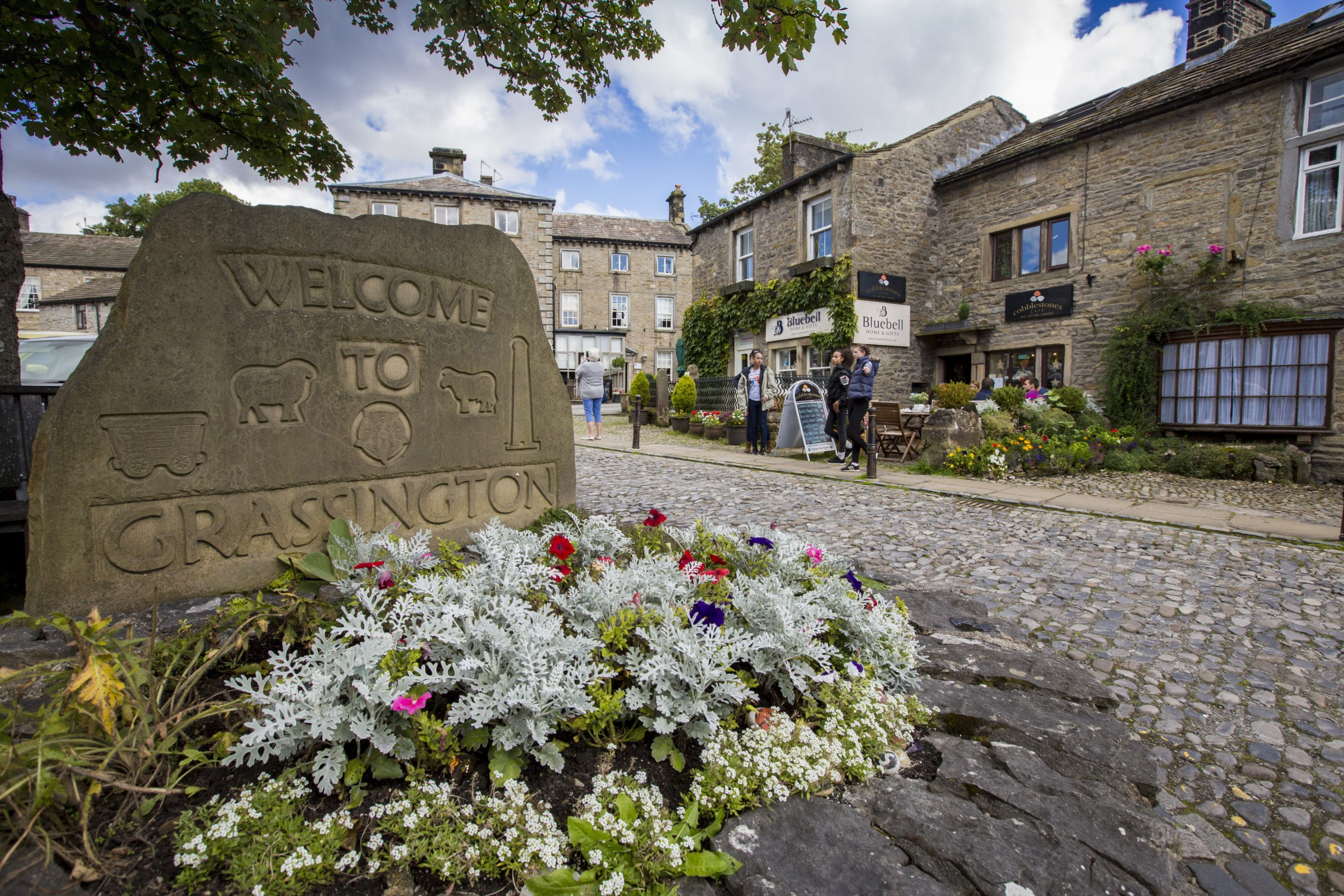
Grassington Folk Museum is a fantastic place to learn more about lead mining in Wharfedale. The cottage, itself a part of Old Grassington, is thought to most likely have been a miner’s cottage.
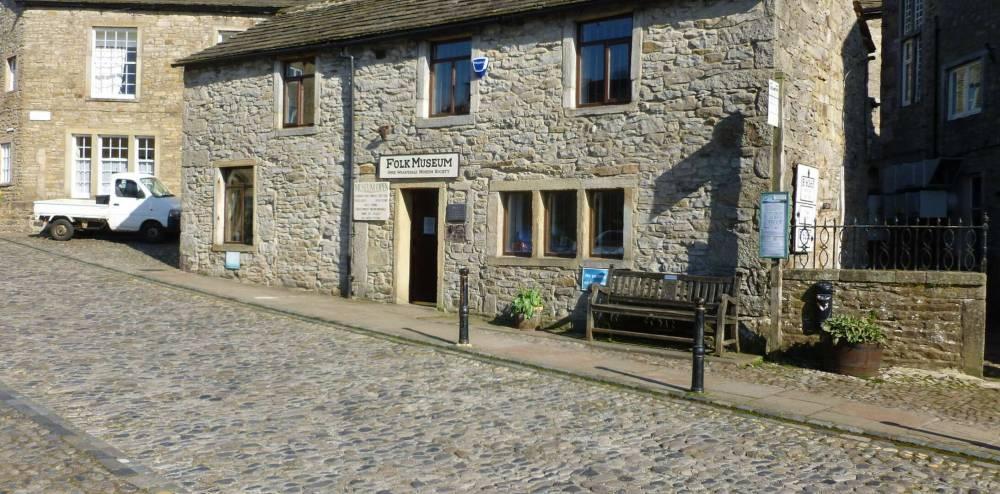
Grassington Folk Museum
Grassington Folk Museum is a must for anyone interested in rural village history. The museum holds a selection of local items of interest and has friendly and knowledgeable staff.
Read more about Grassington Folk MuseumRead on to learn more about the miner’s cottages in Grassington.
Pre site visit information
Safety First
You will get the most from exploring the remains of the lead mining industry of Wharfedale in the Yorkshire Dales if you are properly equipped. Many of the leading sites are high up on moorland where the weather is changeable. Sunshine can turn quickly to rain and temperatures can be significantly chillier than down in the valley bottom. Some of the sites lie along rough or muddy paths so good boots are essential. If you handle pieces of lead ore, remember that lead is poisonous so wash your hands thoroughly before eating. Please be very aware that there may be open or poorly capped mine shafts lying close by. Don’t be tempted to explore away from the path and make sure dogs and children are kept well under control.
Accessibility
Grassington miners cottages can be seen from the road.
Yarnbury is accessible for many – Existing gradients will be no more than 1:10, although newly built gradients can be up to 1:8. The path surface will preferably be hard and firm in all weathers and may be rougher with some stones of 4cm diameter. They are suitable for assisted wheelchair users and those with more robust, all terrain type buggies.
Grass Wood is accessible for some – Existing gradients will be no more than 1:8 will have improved surfacing or handrails. There may be some low steps up to 10cm in height. Stone surface material may be up to 10cm in diameter.
Grassington Moor, Hebden Gill, Lea Green, Red Scar Mine are not accessible sites.
Grass Wood
Mined lead ore, galena, requires a complex process of crushing, heating or smelting to produce pure metal from the ore. The earliest method used in the dales, to achieve this that we know of was the bale hearth. A bale hearth is a bonfire-like mound, built on a hillside to catch the wind, fuelled by wood or peat. However, once smelting got more sophisticated and moved inside purpose-built smelt mills, finding enough fuel became a full-time occupation.
Grass Wood was an important source of kiln-dried wood for the smelt mills up on Grassington Moor. This kiln-dried wood was known as ‘white coal’ or ‘chop wood’. The wood was cut, stacked over shallow pits and dried using burning brash and twigs. Several chop kilns, sometimes called ‘elling hearths’, survive in amongst the trees of Grass Wood. The dried wood was then packed into the panniers of ponies and walked up to the moor. Look carefully in neighbouring Bastow Wood to find the remains of pony enclosures where they were kept overnight.
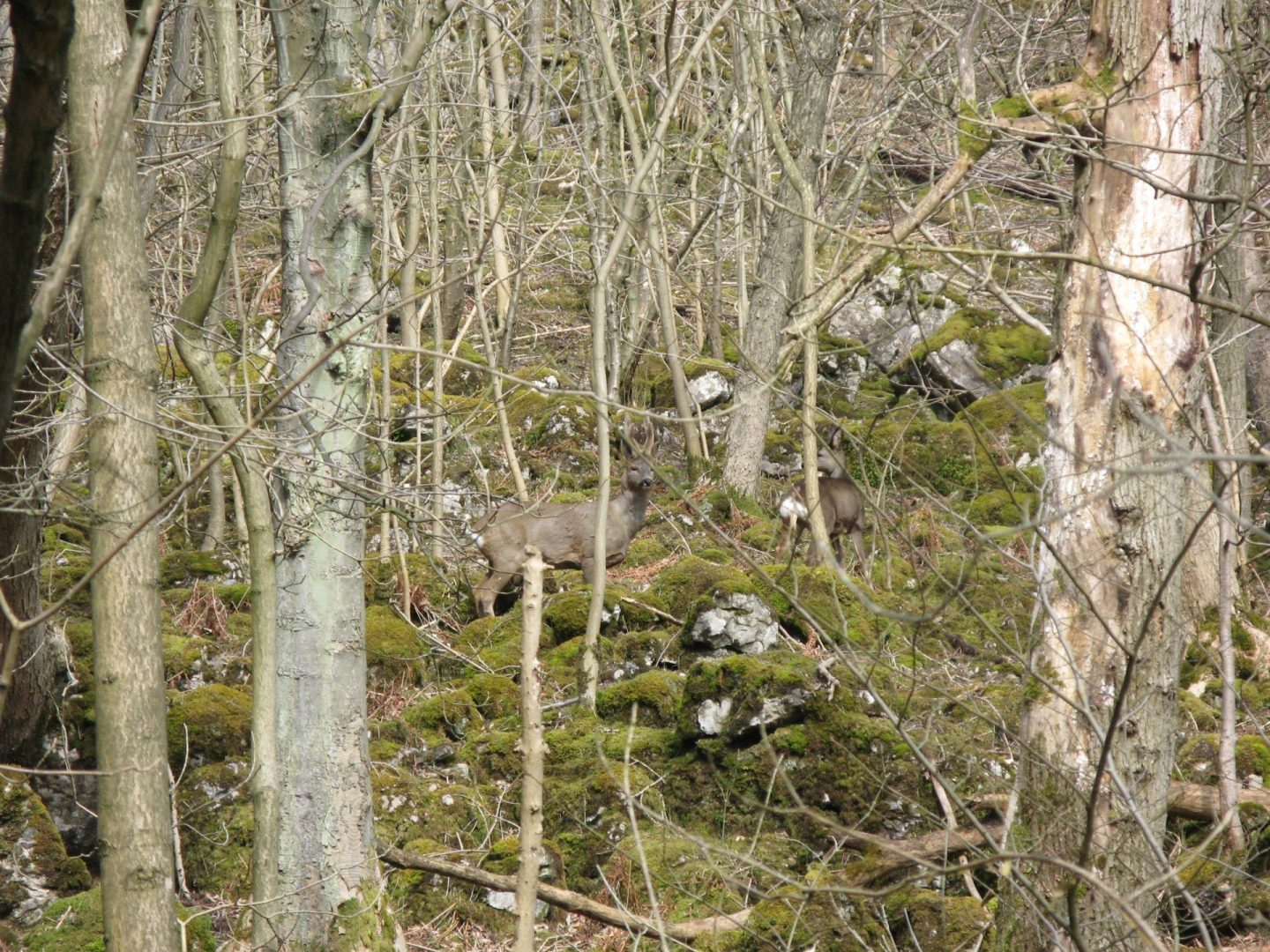
Deer in Grass Wood, Wharfedale
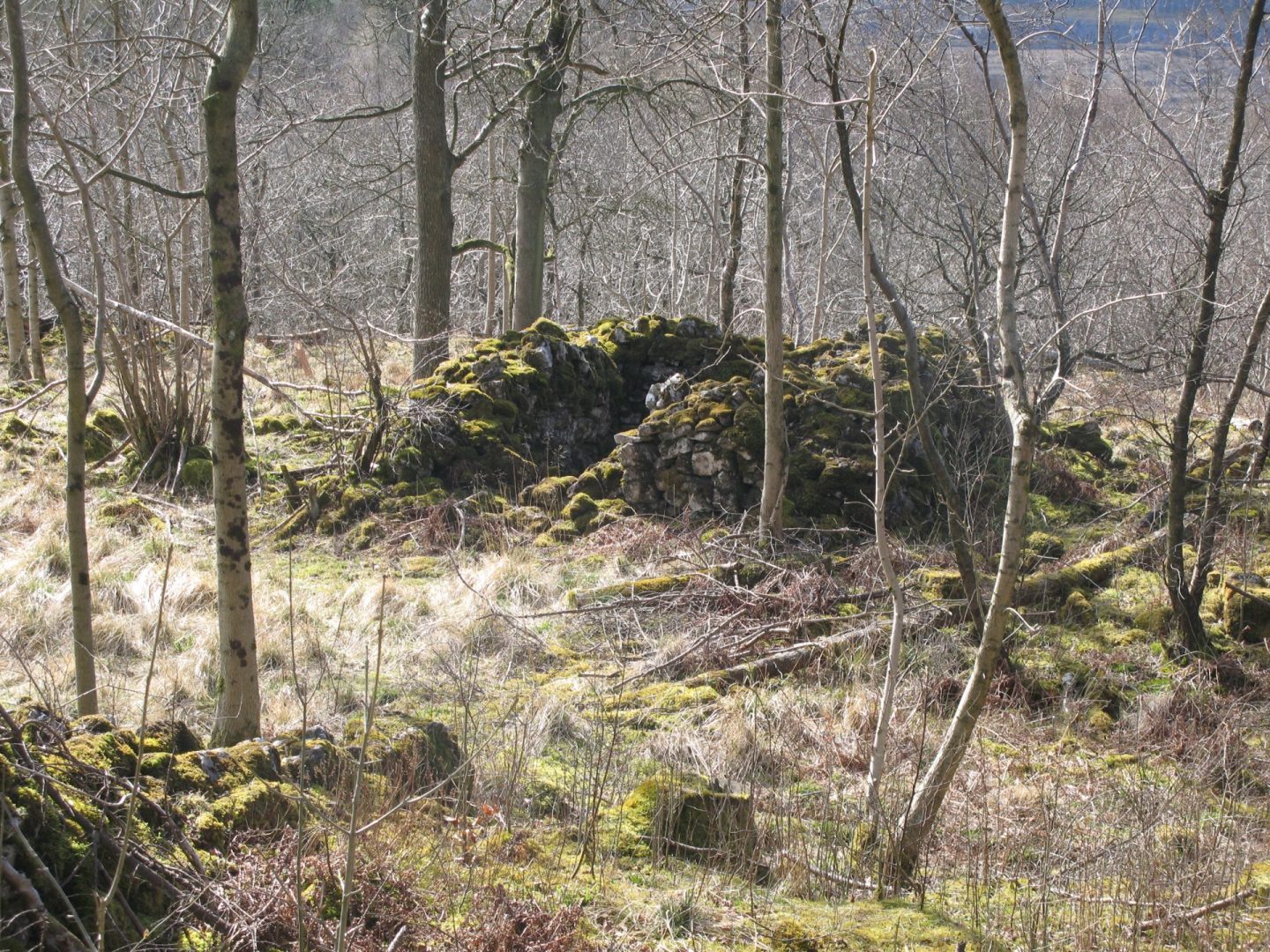
Chop kiln remains in Grass Wood
Grassington miner's cottages
The huge mining operation up on Grassington Moor drew workers in from the surrounding countryside. Extra housing had to be found for these workers in a nearby location. Chapel Street, in Grassington, had a fine old roadside farmhouse along with its barn and outbuildings. These buildings were joined together and then divided up into cottages to house mine workers and their families.
The majority of people who worked in the lead mining industry lived within about a four-mile radius of the mines. Each day they walked to work, returning at night often in wet muddy clothes. Nineteenth-century mine inspectors reported that in the north of England, most miners lived on smallholdings. They might have had vegetable gardens and perhaps a milk cow or a few sheep. The inspectors reported the outdoor work and fresh food made them healthier than miners in other parts of the country.
If you would like to see what the walk to work would have been like for these miners, follow circular walk Yarnbury and Hebdon Gill.
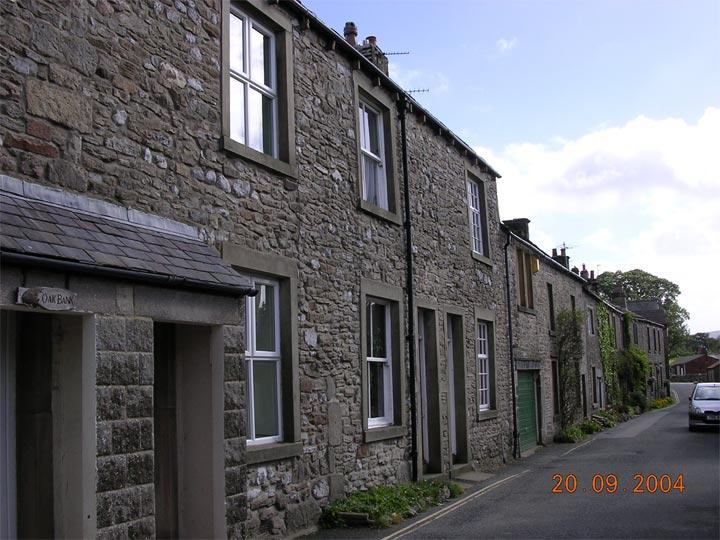
Grassington miners cottages
Grassington Moor
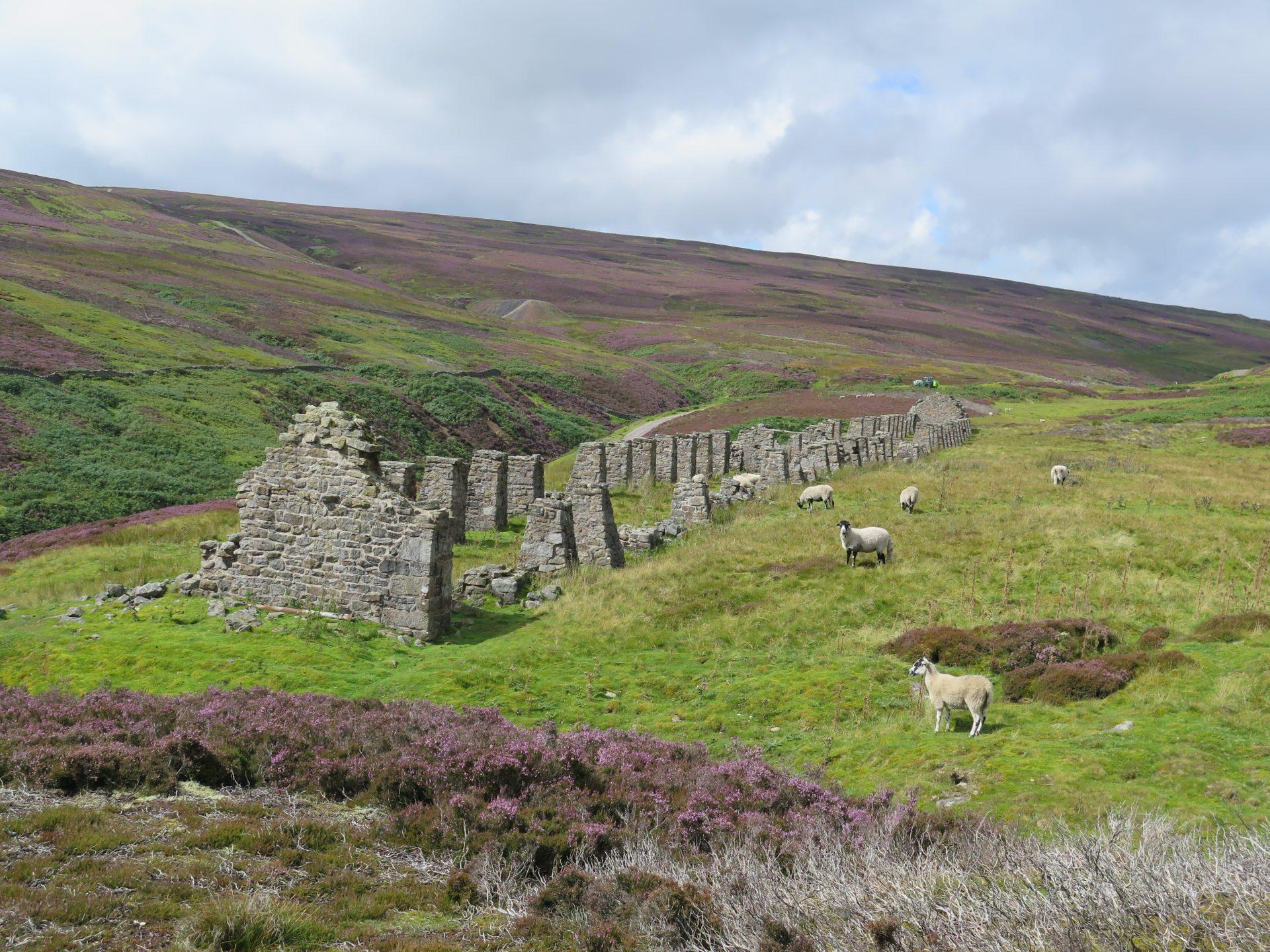
Viewed from a distance, the lead mining remains on Grassington Moor are truly impressive. Mining began on a small scale here sometime in the sixteenth century. By the early nineteenth century, the Duke of Devonshire’s Mineral Agents were exploiting the lead veins as intensively as possible. Deep shafts were sunk and water was ingeniously collected and deployed to power the machinery. The water-powered machinery drove ore crushing and sorting machinery, mine ventilation systems, and smelt mill bellows. Black- or gunpowder was also extensively used, and a purpose-built powder house at Beever Mine survives almost intact.
Dressed ore was taken to Cupola smelt mill, built in 1792 with state-of-the-art reverberatory furnaces which could burn continuously. Dominating the moor is the smelt mill chimney measuring 1.7 km in length, the longest in the Yorkshire Dales. The gases or ‘fume’ from the smelting hearths contained valuable amounts of lead. The flue was periodically scraped and washed out to recover it. This was a dangerous and thoroughly unpleasant job.
The smelt mill, flue and Beever Powder House all lie on the circular walk- Grassington Lead Mining Trail.
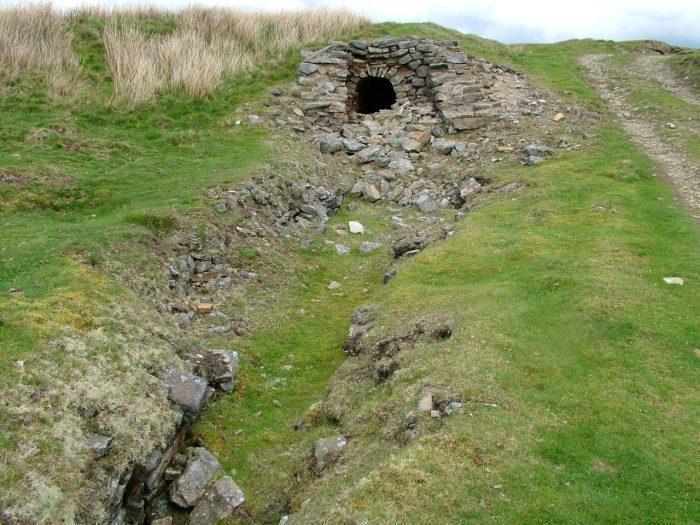
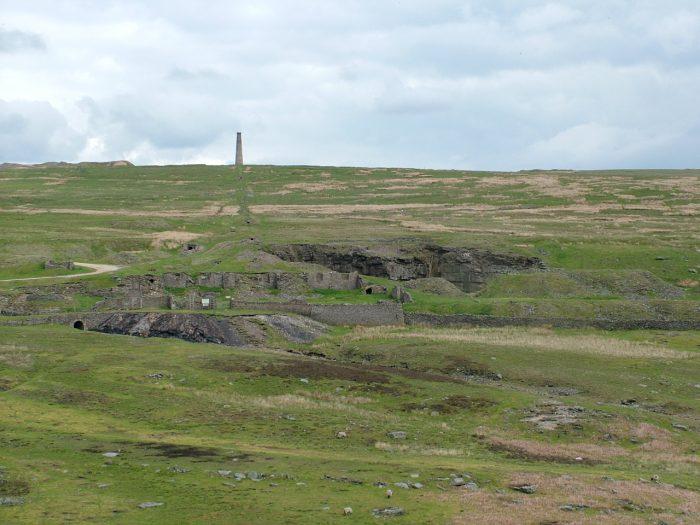
Lead mining remains on Grassington Moor
Hebden Gill
The valley north of Hebden village, was chosen as the location for one of the longest drainage levels in the Dales. The Project began in 1796 in an attempt to drain deep mines on Grassington Moor. The mines needed to be drained as they had become virtually unworkable due to flooding. The intention was also that once complete, it could be used as an underground canal. This canal could then be used to haul ore and waste out by boat. However, progress was very slow, and after 20 years it was decided to make the tunnel at standard horse-level size. Still, it took another 14 years for the 2,300 metre-long level to reach its destination below the deep mines on Grassington Moor.
The dressing floor was where lead ore, galena, was crushed and sorted before being sent to be smelted into lead. Washing the crushed ore originally would have been done with the use of hand-operated machines and hammers. These machines included stirring paddles and sieves such as buddles and hotching tubs. Later water power was used to drive the crushing and sorting machinery.
Our circular trail from Yarnbury and Hebden Gill will take you past several other neatly-arched level entrances. Find the remains of a small dressing floor where lead ore was processed before being taken to a smelt mill.
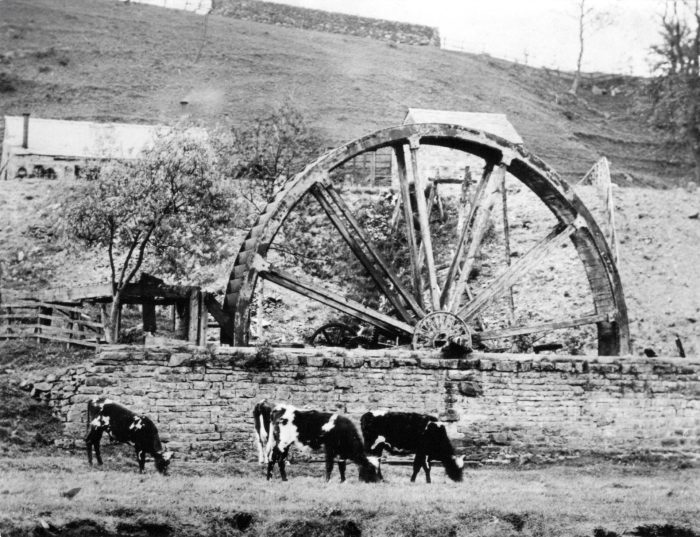
Hebden Horse Level, c1910. Waterwheel which drove the compressor supplying air to rock drills.
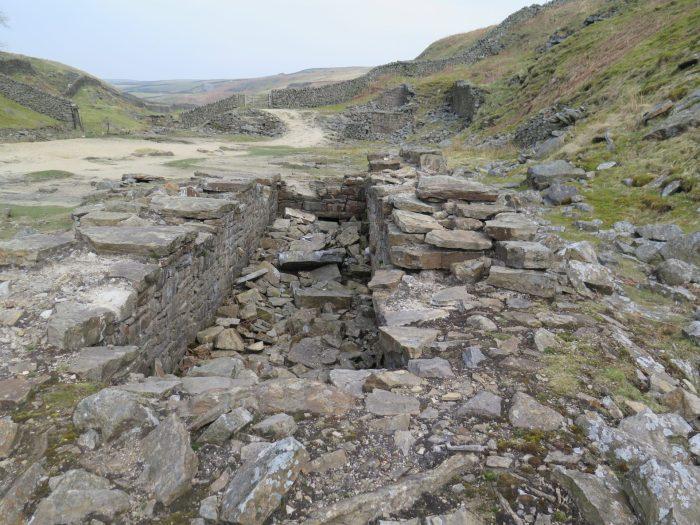
Recent image of Hebden Gill dressing floor wheel pit.
Lea Green
The earliest evidence of lead mined in the Dales is some first-century AD Roman lead ingots with imperial stamps, found in Nidderdale. No evidence for the mines they came from survives, but the Romans probably worked surface outcrops of lead ore.
A small Romano-British settlement was discovered by archaeologists on Lea Green. There is evidence for early lead mining, but it probably dates to the seventeenth or eighteenth centuries. At this location veins of lead ore run close to the surface. Lines of shallow depressions called ‘open rakes’, were trenches dug along a shallow lead vein.
Elsewhere on Lea Green you may spot the circular spoil heaps created by digging ‘shallow shafts’ down to deeper veins of lead. Here, hand-operated winches were used to lift the ore-rich material, called ‘bouse’ along with the spoil or ‘deads’.
Discover a reproduction of one of the Roman lead ingots at our Dales Countryside Museum in Hawes.
Red Scar Mine
This remote Red Scar mine complex was built in the middle of the nineteenth century. The site was located next to rich veins of lead ore already being worked on Grassington Moor and Greenhow. Therefore, the company confidently assured potential shareholders that there would be a fine return on their investment. They assured “none of the disappointment, which often arises in similar undertakings…can be experienced by this Company”. Sadly, however, flooding and poor-quality veins meant they eventually ran out of money, and the mine was closed in 1877.
The initial confidence of the company was reflected in the fine quality of the buildings on the site. It is possible that the Directors intended the mine to be a showcase for further enterprises across the dale. The remains of the office building and lodge house built around 1867, are particularly notable and still dominate the site. Miners usually lived in nearby settlements, but Red Scar is so remote the company provided basic accommodation for them on-site.
The mine can be reached by taking a detour from the well-marked footpath around Grimwith Reservoir. Be aware that the site is remote and, as with all lead mining sites, must be explored with extreme caution.
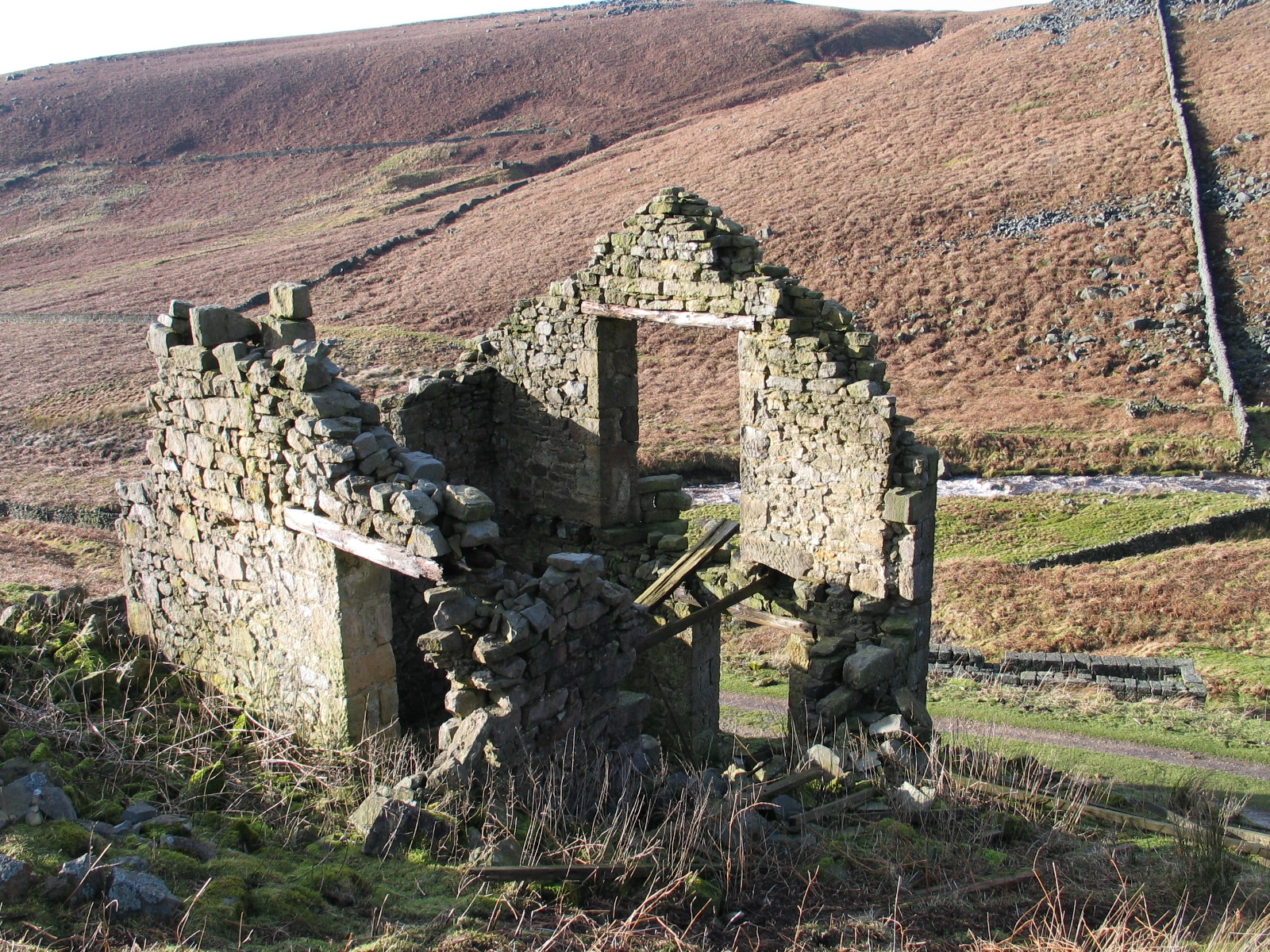
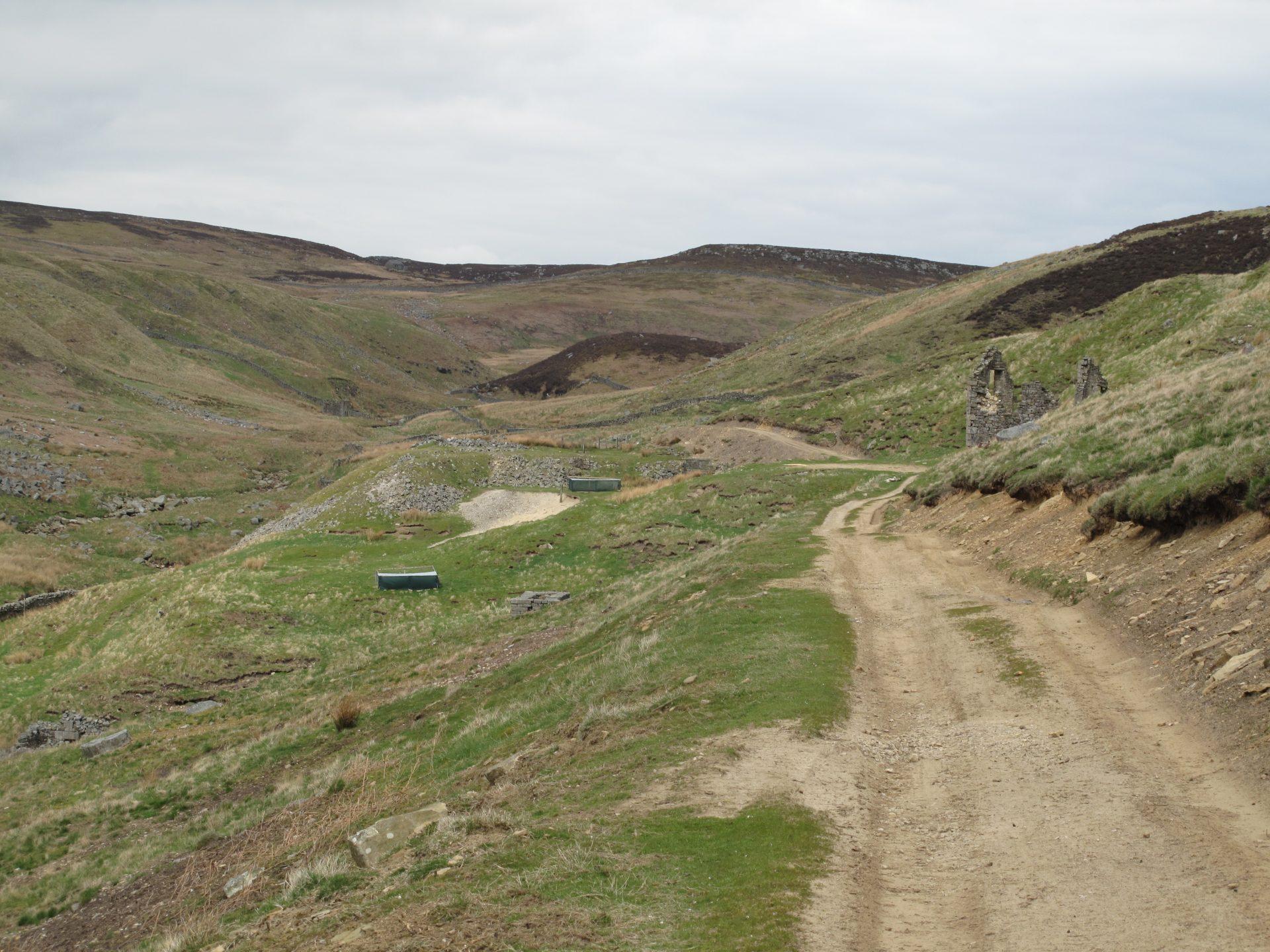
Red Scar mine remains, Wharfedale
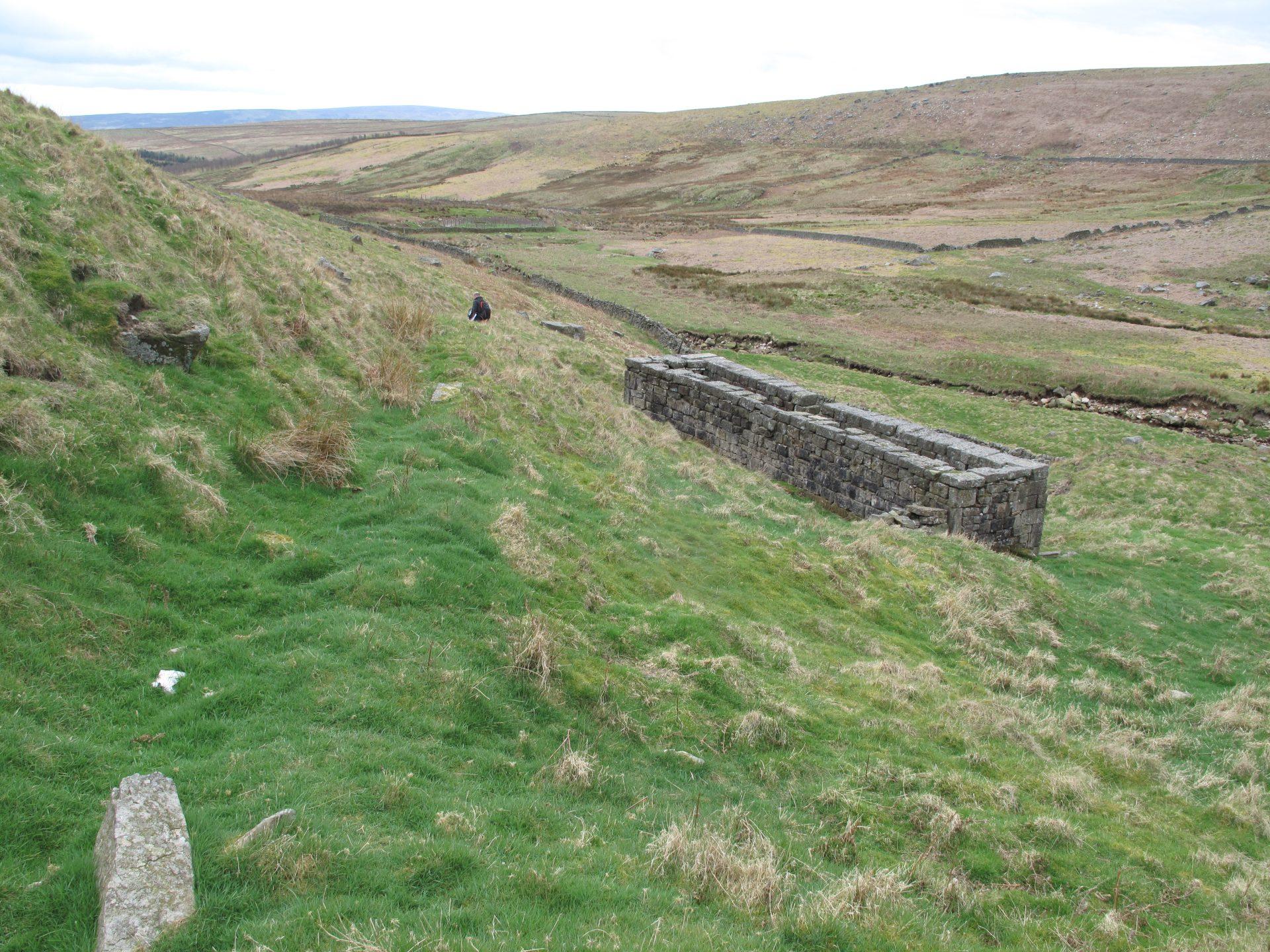
Office building/lodge house of Red Scar mine, Wharfedale.
Yarnbury
The grand house at the top of Moor Lane and the big spoil heaps nearby are a clue to the importance of this part of Wharfedale in the history of lead mining in the Yorkshire Dales. The Duke of Devonshire owned the mineral rights here and Yarnbury House was built in 1826 for his Mineral Agent. At this time, the industry was in full swing; with shafts being sunk out on the moor, water-powered dressing floors for crushing and sorting the ore and a modern smelt mill producing tons of lead nearby.
At this location you can also see evidence for older ways of working dating to the sixteenth century. At that time, lead miners bid for sections or ‘meers’ of ground along the lead veins. The miners would dig shallow shafts in order to get at the lead. This method resulted in doughnut-shaped mounds of spoil. The ore was winched up from the bottom by hand; however, deeper shafts needed winches called ‘whims’ turned by horses.
The waymarked Grassington Lead Mining Trail starts from here. It has useful reconstruction drawings on a series of interpretation panels. For a longer circular route follow the Yarnbury to Hebden Gill trail – also available on our walking app.
Plan your visit
Get ready for your visit with travel information, facilities and tips to help you enjoy the Yorkshire Dales.
Read more about Plan your visitRelated pages
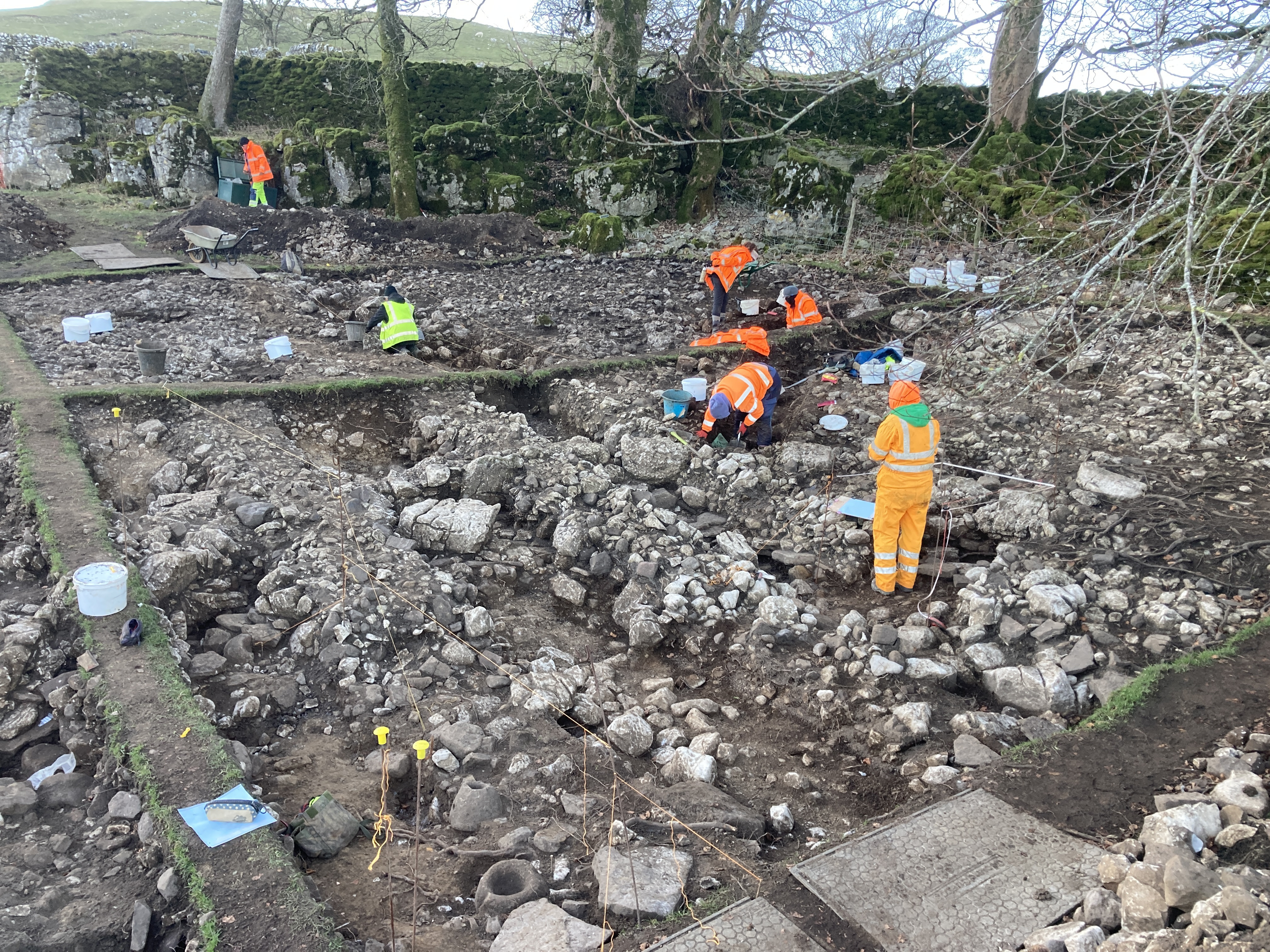
From prehistoric remains to historic buildings, discover the heritage of the Yorkshire Dales.