Objective 2.5
Some progress
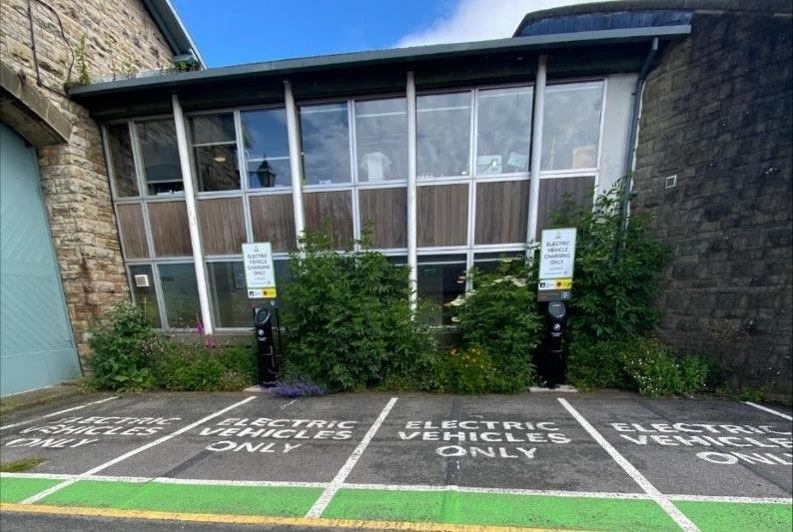
Support more services along the Settle-Carlisle Railway and the reinstatement of other rail lines, increase bus and shared transport links to surrounding towns, and improve infrastructure for electric vehicles, so as to reduce greenhouse gas emissions from travel by 50% by 2030 (compared to 2019).
Funding needed
This is one of the 'transformational' objectives that does not currently have the funding needed to achieve it.
Progress
National data on greenhouse gas emissions is published 2 years in arrears. Figures published in 2026 (for 2024) showed emissions from transport in the National Park were 77,700t CO2e - a 10% reduction compared to 2019.
Latest news - A community-run bus service between Hawes and Sedbergh is returning to help residents stay connected - Gazette & Herald
Rationale
Travel within the National Park is the second largest source of greenhouse gas emissions. This reflects both the high number of visitors (most of whom arrive by car) and the very limited provision of public transport services. Public transport services are crucial to households that do not have access to, or cannot afford to run, a car. They provide a link between settlements inside the Park and the larger service centres outside that provide employment and key services, like further education and training, hospitals, recreation and retail (see objectives D5 and 6.3). Commercial bus services are often not viable in a deeply rural area with a small and highly dispersed population. Changes in how bus services are provided through the new York & North Yorkshire Combined Authority will give greater focus to rural areas like the National Park. Its review of the North Yorkshire bus network and a new Local Transport Plan will be essential to set out the ambitions for improvements, including the potential for a 7-day a week bus network on the core corridors, drawing on the success of DalesBus. The Leeds-Settle-Carlisle railway is a key link for connecting residents to services outside the area, and bus services need to be better integrated with it, and other rail services. Increasing services like Northern’s ‘Yorkshire Dales Explorer’ direct Saturday service from Rochdale to Ribblehead, reinstating other lines – including the Colne-Skipton Railway Line, and the former Wensleydale Railway - and better service patterns linking the Dales with Leeds and the Aire Valley could all increase car-free access to the National Park, as could more ‘active travel’ (see 6.6).
Lead organisations
North Yorkshire Council; Westmorland & Furness Council; Lancashire County Council; North Yorkshire Combined Authority; West Yorkshire Combined Authority.
Supporting organisations
Network Rail; Wensleydale Railway; Skipton East Lancashire Rail Action Partnership; Settle-Carlisle Railway Development Company; Dales and Bowland Community Interest Company; Leeds–Lancaster-Morecambe Community Rail Partnership; Little White Bus; Upper Wharfedale Bus Community Interest Company; Upper Wharfedale Community Interest Company. Cumbria Tourism; Visit North Yorkshire; Western Dales Bus; Northern Trains; Yorkshire Dales National Park Authority.
Cost over 5 years
Funding shortfall